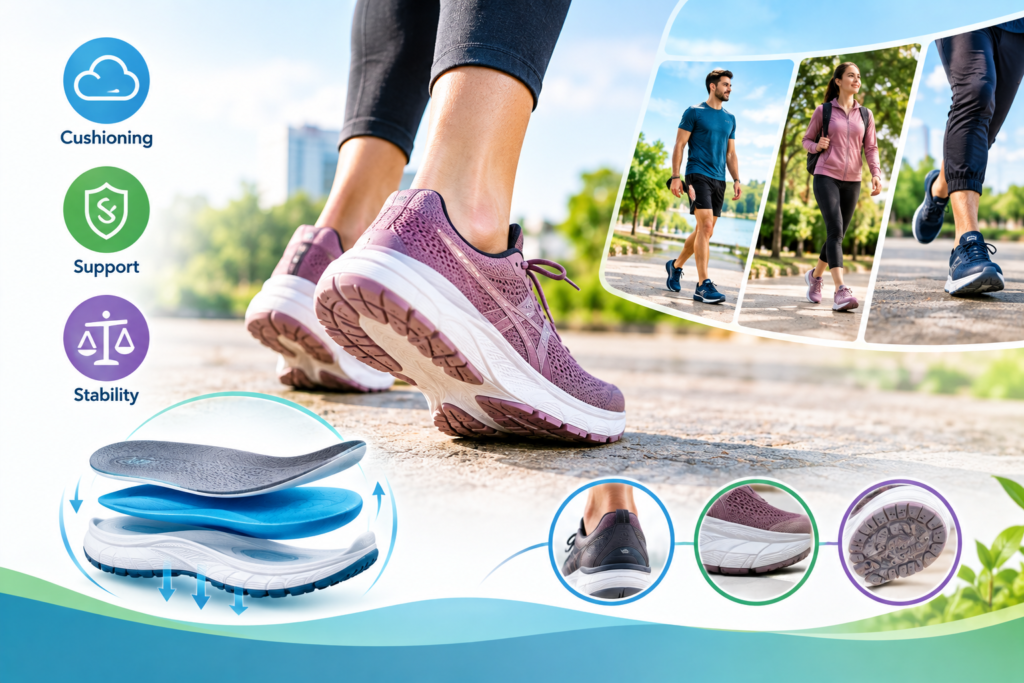
The right pair of shoes does more than complete your outfit. Good footwear can improve everyday comfort, provide stability, support natural movement, and make long hours of walking or standing more comfortable.
Whether you are walking to work, exercising, commuting, traveling, or spending several hours on your feet, cushioning and support are two of the most important features to consider when choosing footwear.
The best walking shoe should offer an appropriate balance of cushioning, support, flexibility, stability, and fit. Similarly, when choosing men’s shoes or women’s shoes, the right combination of these features can depend on your foot type, activity level, walking surface, and personal comfort preferences.
Many people assume that the softest shoe is automatically the most comfortable. However, excessive softness without sufficient stability can affect balance and foot control. On the other hand, a shoe with strong support but insufficient cushioning may feel uncomfortable during long periods of walking or standing.
This complete guide explains how footwear cushioning and support work, the different cushioning levels and technologies available, important stability features, and how to choose the right footwear for your needs.
What Is Footwear Cushioning?
Footwear cushioning refers to the materials and construction within a shoe that help absorb impact and improve underfoot comfort.
The midsole is one of the main components responsible for cushioning. It sits between the outsole and the upper or insole area and may use different types of foam or cushioning technologies.
Common cushioning materials include:
- EVA foam
- Polyurethane (PU)
- Gel-based systems
- Air cushioning
- Memory foam
- Specialized foam compounds
When your foot contacts the ground, cushioning materials compress to help manage impact and provide a more comfortable underfoot feel.
Benefits of Good Cushioning
Appropriate cushioning can help provide:
- Better everyday comfort
- Improved shock absorption
- Reduced feeling of impact
- Greater comfort during long walks
- Less underfoot fatigue
- A smoother walking experience
However, cushioning should not be considered separately from support and stability.
For more information, read our guide to the core benefits of footwear cushioning.
Why Footwear Support Matters
While cushioning focuses primarily on underfoot comfort and impact absorption, support helps keep the foot secure and stable inside the shoe.
A supportive shoe should provide an appropriate structure around the foot without unnecessarily restricting natural movement.
Important support areas include:
- Heel counter
- Midsole structure
- Arch area
- Upper construction
- Outsole platform
- Secure lacing or fastening system
The right level of support can be especially useful for people who spend long hours walking or standing.
Cushioning vs. Support: What’s the Difference?
Cushioning and support are often discussed together, but they perform different functions.
Cushioning
Cushioning is mainly concerned with:
- Softness
- Impact absorption
- Underfoot comfort
- Shock management
Support
Support is mainly concerned with:
- Foot stability
- Secure fit
- Movement control
- Structural support
A comfortable shoe generally needs an appropriate combination of both.
For a detailed explanation, explore our guide to stability and support features.
Different Levels of Footwear Cushioning
Not everyone needs the same level of cushioning. The ideal choice depends on your activity, walking habits, surface, and personal preference.
Light Cushioning
Lightly cushioned shoes generally provide a more responsive and closer-to-the-ground feel.
They may suit people who prefer:
- A lightweight shoe
- Greater ground awareness
- A responsive feel
- More flexibility
Light cushioning can be useful when you prefer less material underfoot and a more natural feeling while moving.
Moderate Cushioning
Moderate cushioning provides a balance between comfort and responsiveness.
It can be suitable for:
- Everyday walking
- Commuting
- Casual activities
- General fitness
- Moderate standing
For many people, this can be a practical choice for an everyday walking shoe.
Read our detailed guide on understanding cushioning levels to learn more.
Maximum Cushioning
Maximum cushioning focuses more heavily on underfoot comfort and impact absorption.
It may be preferred by people who:
- Walk long distances
- Stand for extended periods
- Prefer a softer underfoot feel
- Spend considerable time on hard surfaces
- Want additional cushioning during everyday activities
However, maximum cushioning is not automatically the best choice for everyone. The shoe should still provide an appropriate level of stability and support.
How Cushioning Affects Walking Comfort
Walking involves repeated contact between your feet and the ground. Hard surfaces such as concrete, tile, and asphalt can make underfoot comfort particularly important during long periods of use.
A suitable cushioning system can make the shoe feel more comfortable while walking or standing.
When choosing the best walking shoe, consider:
- How long you normally walk
- The surfaces you walk on
- Your preferred level of softness
- Your foot type
- The overall stability of the shoe
For additional guidance, read choosing cushioning based on your needs.
Can Too Much Cushioning Be a Problem?
More cushioning does not always mean more comfort.
An extremely soft shoe may feel comfortable initially but can sometimes provide less of the firm, stable feeling that some walkers prefer.
Potential concerns with excessive softness include:
- Reduced ground feedback
- Less stable feeling
- Excessive compression
- Reduced responsiveness
- Difficulty finding the right balance between comfort and stability
This does not mean highly cushioned footwear is bad. Instead, the goal is to choose cushioning that matches your individual needs.
The best walking shoe is not necessarily the softest shoe. It is the shoe that provides the right combination of comfort, cushioning, support, and stability for you.
Important Support Features to Look For
When evaluating walking footwear, pay attention to the structural components of the shoe.
1. Heel Counter
The heel counter is the area surrounding the back of the heel.
A well-constructed heel counter can help:
- Keep the heel secure
- Improve rear-foot stability
- Reduce excessive heel movement
- Provide a more supportive fit
When trying shoes, check whether your heel stays comfortably in place while walking.
2. Midsole Structure
The midsole contributes to both cushioning and the overall feel of the shoe.
A good midsole should provide an appropriate combination of:
- Comfort
- Shock absorption
- Stability
- Responsiveness
Different footwear models use different foam materials and construction techniques.
3. Arch Support
Arch support is an important consideration, particularly when choosing footwear according to your foot shape.
People with different arch types may prefer different shoe designs.
Before choosing a shoe, learn more about how to choose shoes based on foot type.
4. Stable Outsole
The outsole provides direct contact with the walking surface.
A well-designed outsole can contribute to:
- Traction
- Stability
- Durability
- Ground contact
If you frequently walk on slippery or challenging surfaces, consider footwear designed with appropriate grip and slip resistance.
Learn more in our comprehensive guide to anti-slip footwear.
Modern Cushioning Technologies
Footwear manufacturers use different technologies to improve comfort and performance.
Some common cushioning technologies include:
EVA Foam
EVA is widely used in footwear midsoles because it can provide cushioning while keeping shoes relatively lightweight.
Polyurethane Foam
PU can offer a more structured and durable cushioning feel and is used in various types of footwear.
Gel Systems
Gel-based cushioning systems are designed to help absorb impact and improve underfoot comfort.
Air Cushioning
Air-based systems use air-filled components to provide cushioning and a specific underfoot feel.
Memory Foam
Memory foam is commonly used in insoles and footbeds to provide a softer, more adaptive feeling under the foot.
Different technologies can produce different levels of softness, responsiveness, durability, and stability.
For a deeper explanation, read our guide to modern cushioning technologies.
Choosing the Best Walking Shoe for Your Needs
Finding the best walking shoe starts with understanding how you plan to use it.
Consider these factors before buying:
Walking Distance
If you walk for several hours or cover long distances regularly, comfort and cushioning may become higher priorities.
Walking Surface
The footwear you need for indoor floors may differ from footwear intended for outdoor paths, roads, or uneven surfaces.
Foot Type
Your arch and foot shape can influence the type of fit and support you prefer.
Activity
Walking, standing, gym training, running, and other activities place different demands on footwear.
Fit
Even excellent cushioning and support cannot compensate for an uncomfortable fit.
For a broader guide to selecting footwear, read Choosing the Right Footwear: Complete Guide for Comfort, Support, and Performance.
Choosing Cushioning for Men’s Shoes
When selecting men’s shoes, cushioning should match the intended activity and daily usage.
For everyday walking or long hours of standing, look for a combination of:
- Comfortable cushioning
- Secure heel fit
- Appropriate support
- Stable outsole
- Adequate flexibility
- Good breathability
Men who walk frequently should avoid choosing footwear based only on appearance or price.
The right pair should feel comfortable during actual movement.
You can also explore our men’s footwear guide for additional information.
Choosing Cushioning for Women’s Shoes
When selecting women’s shoes, comfort and support should also be considered alongside style.
Look for footwear that provides:
- A comfortable fit
- Sufficient toe room
- Appropriate cushioning
- Secure heel positioning
- Suitable support
- Good outsole grip
- Breathable construction
Whether you need footwear for walking, commuting, work, or everyday activities, choose cushioning based on your actual needs rather than simply selecting the softest shoe.
How to Check if a Shoe Has Enough Support
You can perform a few simple checks when trying on footwear.
Check the Heel
Your heel should remain secure without excessive slipping.
Check the Midfoot
The shoe should feel supportive without creating uncomfortable pressure.
Check the Forefoot
Your toes should have enough room to move naturally.
Walk Around
Take several steps and pay attention to:
- Comfort
- Stability
- Heel movement
- Pressure points
- Cushioning
- Flexibility
For more practical testing methods, see our guide to simple stability tests before buying.
The Importance of Proper Shoe Fit
Cushioning and support cannot compensate for an incorrectly sized shoe.
A properly fitted shoe should:
- Feel comfortable immediately
- Provide sufficient toe room
- Hold the heel securely
- Avoid uncomfortable pressure
- Allow natural foot movement
Try both shoes before buying because your feet may differ slightly in size or shape.
For more information, read our Shoe Fitting Guide and learn how to choose the right shoe size.
Common Mistakes When Choosing Cushioning and Support
Avoid these common mistakes when shopping for footwear:
Choosing the Softest Shoe
The softest shoe is not necessarily the best option for your needs.
Ignoring Fit
Even advanced cushioning technology cannot fix an incorrectly sized shoe.
Focusing Only on Brand
Different models from the same brand can have very different cushioning and support characteristics.
Ignoring Your Activity
A shoe designed for running may not provide the same experience as a shoe designed specifically for walking.
Forgetting About Stability
Cushioning should work together with appropriate stability and support.
For more buying advice, read common mistakes to avoid when buying walking shoes.
How to Maintain Footwear Cushioning
Proper maintenance can help keep your footwear performing well for longer.
Follow these simple practices:
- Keep shoes clean
- Allow them to dry naturally
- Avoid storing them while damp
- Rotate between pairs when possible
- Inspect the outsole regularly
- Check for compressed cushioning
- Replace shoes when performance declines
For more practical maintenance advice, read maintenance and lifespan tips.
When Should You Replace Walking Shoes?
Even the best walking shoe will eventually lose some of its original cushioning, support, and traction.
Look for signs such as:
- Flattened cushioning
- Uneven outsole wear
- Reduced grip
- Damaged upper materials
- Loss of support
- Increased foot fatigue
- New discomfort while walking
Instead of replacing shoes simply because they have reached a certain age, evaluate their actual condition and performance.
Quick Cushioning and Support Checklist
Before purchasing your next pair of shoes, ask:
- Does the shoe feel comfortable?
- Is the cushioning appropriate for my needs?
- Does the heel stay secure?
- Is there enough toe room?
- Does the shoe provide adequate support?
- Does it feel stable while walking?
- Is the outsole suitable for my walking surface?
- Does it match my daily activity?
- Have I tried both shoes?
- Can I walk comfortably in them?
If the answer is yes, you are more likely to find footwear that suits your needs.
Conclusion
Cushioning and support are two of the most important features to consider when choosing comfortable and functional footwear. While cushioning helps improve underfoot comfort and impact absorption, support and stability help create a secure foundation for movement.
The best walking shoe should provide an appropriate balance of cushioning, support, stability, flexibility, fit, and traction based on your individual needs.
Whether you are choosing men’s shoes, women’s shoes, or everyday walking footwear, avoid selecting a pair based only on appearance or softness. Consider your foot type, activity level, walking surface, comfort preferences, and required support.
With the right combination of cushioning and support—and proper maintenance—you can enjoy more comfortable footwear for your everyday walking and standing needs.