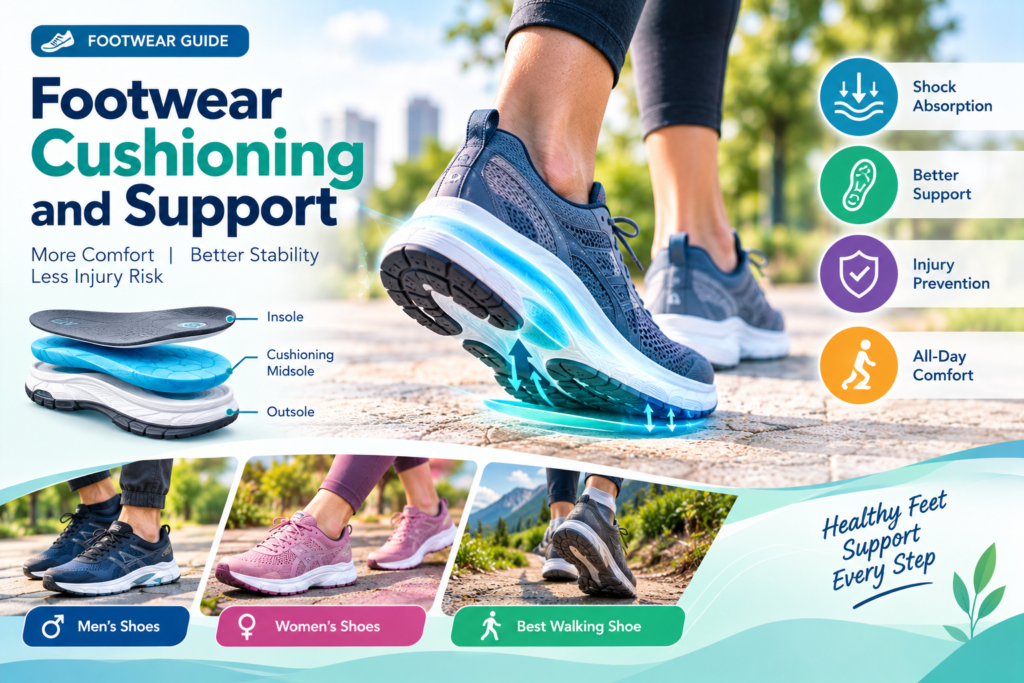
Footwear cushioning is more than just a feature that makes shoes feel soft. The right cushioning can improve everyday comfort, help absorb impact, reduce foot fatigue, and support smoother movement.
Whether you walk, run, exercise, commute, or spend long hours standing, choosing footwear with appropriate cushioning can make a significant difference to your overall experience.
When looking for the best walking shoe, cushioning should be considered alongside fit, support, stability, flexibility, and outsole grip. The same applies when choosing men’s shoes or women’s shoes for everyday activities.
For a complete overview of footwear selection, read our complete guide to choosing the right footwear.
What Is Footwear Cushioning?
Footwear cushioning refers to the materials and construction inside a shoe that help absorb and manage impact when your foot contacts the ground.
The midsole is one of the main components responsible for cushioning. Depending on the shoe, it may use materials such as:
- EVA foam
- PU foam
- Gel systems
- Air cushioning
- Memory foam
- Advanced foam compounds
When your foot lands, cushioning compresses to help absorb some of the impact. As you move forward, the material rebounds to provide a more comfortable and responsive feel.
However, more cushioning does not always mean a better shoe. The ideal level depends on your activity, foot type, walking surface, and personal comfort preference.
Learn more about footwear cushioning and support.
1. Shock Absorption
One of the most important benefits of footwear cushioning is shock absorption.
Every step creates impact as your foot meets the ground. A well-designed cushioning system can help manage this impact and improve the overall feel of walking or running.
How Shock Absorption Works
When your foot lands, the cushioning material compresses and absorbs some of the energy generated during impact. As you move through the stride, the material returns toward its original shape.
This can contribute to a smoother and more comfortable walking experience.
Benefits of Shock Absorption
Appropriate cushioning can help:
- Improve underfoot comfort
- Reduce the harsh feeling of hard surfaces
- Distribute pressure more evenly
- Make long walks more comfortable
- Reduce the feeling of repeated impact
For someone searching for the best walking shoe, effective cushioning can be especially useful when walking regularly on hard surfaces.
2. Helps Reduce Foot Fatigue
Walking or standing for several hours can place continuous pressure on your feet.
A comfortable cushioning system can help reduce the feeling of pressure under the foot and make extended periods of activity more manageable.
Why Cushioning Matters for Long Hours
People who spend much of their day walking or standing may experience:
- Tired feet
- Sore heels
- Underfoot discomfort
- General foot fatigue
Choosing footwear with appropriate cushioning can improve comfort during long working days, travel, shopping, commuting, and everyday walking.
For more information about choosing footwear for extended walking and standing, explore our guide to key features to look for in walking and standing shoes.
3. Improves Everyday Comfort
Comfort is one of the biggest reasons people choose cushioned footwear.
However, good comfort is not simply about choosing the softest possible shoe. Cushioning should work together with proper fit, support, and stability.
A comfortable shoe should provide:
- Appropriate underfoot softness
- Adequate support
- A secure heel
- Enough toe room
- Comfortable flexibility
- Suitable traction
When all these features work together, footwear can feel more comfortable during everyday movement.
4. Supports Comfortable Walking
The right cushioning can contribute to a smoother walking experience by helping your foot transition comfortably from heel to toe.
For everyday walkers, cushioning can be particularly useful when footwear is used on:
- Concrete
- Pavements
- Roads
- Indoor floors
- Other firm surfaces
When choosing the best walking shoe, consider the surfaces you normally walk on and how many hours you spend on your feet.
You can also explore best walking and standing shoes by category for more guidance.
5. Supports Better Weight Distribution
A properly designed midsole can help spread pressure across a larger area of the foot.
This can reduce the feeling of concentrated pressure in specific areas and contribute to greater comfort during movement.
Areas That May Experience Pressure
Depending on your foot shape and walking pattern, pressure may be felt around:
- Heel
- Arch
- Forefoot
- Ball of the foot
- Toes
A suitable shoe should provide comfortable contact without creating excessive pressure points.
This is why proper fit is just as important as cushioning.
For practical fitting advice, read our Shoe Fitting Guide.
6. Can Support Long-Distance Walking
Long-distance walking places repeated demands on your feet.
A comfortable walking shoe with suitable cushioning can make extended walks feel more manageable by providing consistent underfoot comfort.
When selecting footwear for longer distances, consider:
- Cushioning
- Support
- Stability
- Weight
- Flexibility
- Breathability
- Outsole grip
The best walking shoe for long-distance use should balance these features rather than relying on cushioning alone.
7. Works Together With Footwear Support
Cushioning and support perform different functions, but they work best together.
Cushioning
Primarily focuses on:
- Comfort
- Impact absorption
- Underfoot feel
- Pressure management
Support
Primarily focuses on:
- Stability
- Foot positioning
- Secure fit
- Movement control
A very soft shoe without enough stability may not feel secure for every wearer. Similarly, a very firm shoe without adequate cushioning may feel uncomfortable.
For more information, read our guide to stability and support features.
8. Cushioning and Injury Risk
Appropriate footwear can be one part of a comfortable and well-supported movement routine, but no shoe can guarantee injury prevention.
Foot discomfort and injuries can also be influenced by factors such as:
- Activity level
- Training intensity
- Walking or running technique
- Recovery
- Foot structure
- Previous injuries
- Overall fitness
Appropriate cushioning may help manage impact and improve comfort, but footwear should be selected as part of a broader approach to healthy movement.
If you experience persistent or significant pain, professional medical advice is more appropriate than relying on footwear changes alone.
9. Benefits for Men’s Shoes
When selecting men’s shoes, cushioning should match the intended use.
For everyday walking and standing, useful features may include:
- Comfortable midsole cushioning
- Stable construction
- Secure heel fit
- Adequate flexibility
- Breathable materials
- Durable outsole
Men who spend long hours walking or standing should prioritize comfort and support rather than choosing footwear based only on appearance.
Explore our men’s footwear guide for additional footwear information.
10. Benefits for Women’s Shoes
When choosing women’s shoes, cushioning can also play an important role in everyday comfort.
Depending on the intended activity, look for:
- Comfortable underfoot cushioning
- Appropriate support
- Secure heel positioning
- Adequate toe room
- Suitable flexibility
- Good outsole traction
Whether you need shoes for commuting, walking, work, travel, or everyday use, the ideal cushioning level depends on your individual requirements.
The best walking shoe for one person may not be the best choice for another, so personal fit and comfort should always be considered.
11. Helps Improve Comfort on Hard Surfaces
Hard surfaces can feel less forgiving during prolonged walking or standing.
People who regularly walk on concrete, tile, or pavement may prefer footwear with cushioning that provides a more comfortable underfoot experience.
Before choosing a shoe, think about where you normally spend your time.
For activity-specific footwear advice, read how to choose shoes based on activity.
12. Different Cushioning Levels for Different Needs
Not everyone needs the same amount of cushioning.
Light Cushioning
May suit people who prefer:
- A lightweight feel
- Greater ground feedback
- More responsiveness
- A less cushioned ride
Moderate Cushioning
Can be suitable for:
- Everyday walking
- Commuting
- Casual use
- General activities
Maximum Cushioning
May appeal to people who prefer:
- A softer underfoot feel
- More cushioning during long walks
- Additional comfort during extended standing
- Greater impact absorption
For more information, read our guide to understanding cushioning levels.
13. How to Choose the Best Walking Shoe With the Right Cushioning
If you are looking for the best walking shoe, start by considering your own needs instead of simply choosing the shoe with the thickest sole.
Ask yourself:
How Much Do I Walk?
If you walk for several hours each day, cushioning and overall comfort may be higher priorities.
What Surfaces Do I Walk On?
Hard indoor floors and paved outdoor surfaces may make cushioning particularly important.
What Does My Foot Type Need?
Your foot shape can influence the support and fit you prefer.
Learn more about how to choose shoes based on foot type.
Do I Need Extra Stability?
If stability is important to you, look beyond cushioning and evaluate the shoe’s overall construction.
Does the Shoe Fit Properly?
A shoe with excellent cushioning will not feel comfortable if it is too small, too large, or poorly shaped for your feet.
Common Cushioning Mistakes to Avoid
Choosing cushioning incorrectly can affect your overall footwear experience.
Avoid these common mistakes:
Choosing the Softest Shoe
The softest shoe is not necessarily the most comfortable or supportive choice.
Ignoring Fit
Cushioning cannot compensate for a poor fit.
Forgetting About Stability
A cushioned shoe should still provide an appropriate level of stability for your needs.
Choosing Shoes Only by Appearance
Good-looking men’s shoes or women’s shoes may not necessarily provide the features your feet require.
Ignoring Your Activity
Choose footwear according to whether you walk, stand, exercise, run, or perform other activities.
For more buying advice, read common mistakes to avoid when buying walking shoes.
How to Maintain Footwear Cushioning
Proper maintenance can help preserve the performance and comfort of your footwear.
Follow these simple tips:
- Keep your shoes clean.
- Allow damp shoes to dry naturally.
- Avoid storing shoes in excessively humid conditions.
- Rotate between pairs when possible.
- Inspect the midsoles and outsoles regularly.
- Avoid continuing to use footwear once cushioning has noticeably deteriorated.
For additional care advice, read maintenance and lifespan tips.
Signs Your Shoe Cushioning May Be Worn Out
Over time, cushioning materials can compress and lose some of their original feel.
Signs that your footwear may need replacing include:
- Flattened cushioning
- Uneven outsole wear
- Reduced comfort
- Loss of responsiveness
- Increased foot fatigue
- New pressure points
- Noticeable changes in how the shoe feels
If your footwear no longer provides the comfort and support it once did, it may be time to consider a replacement.
Quick Cushioning Checklist
Before buying your next pair, ask:
- Does the cushioning feel comfortable?
- Is it appropriate for my daily activity?
- Does the shoe fit properly?
- Does my heel stay secure?
- Is there enough toe room?
- Does the shoe provide adequate support?
- Does it feel stable while walking?
- Is the outsole suitable for my walking surface?
- Does it feel comfortable after several minutes of walking?
If the answer is yes, the shoe may be a suitable option for your needs.
Conclusion
Footwear cushioning plays an important role in everyday comfort, impact management, and a smoother walking experience. The right cushioning can help reduce the feeling of foot fatigue and make prolonged walking or standing more comfortable.
However, cushioning should never be considered on its own. The best walking shoe should combine appropriate cushioning with proper fit, support, stability, flexibility, and outsole traction.
Whether you are selecting men’s shoes, women’s shoes, or everyday walking footwear, focus on what your feet actually need rather than simply choosing the softest or most heavily cushioned option.
By understanding cushioning levels and choosing footwear according to your foot type, activity, and environment, you can make more informed footwear decisions and enjoy greater comfort with every step.