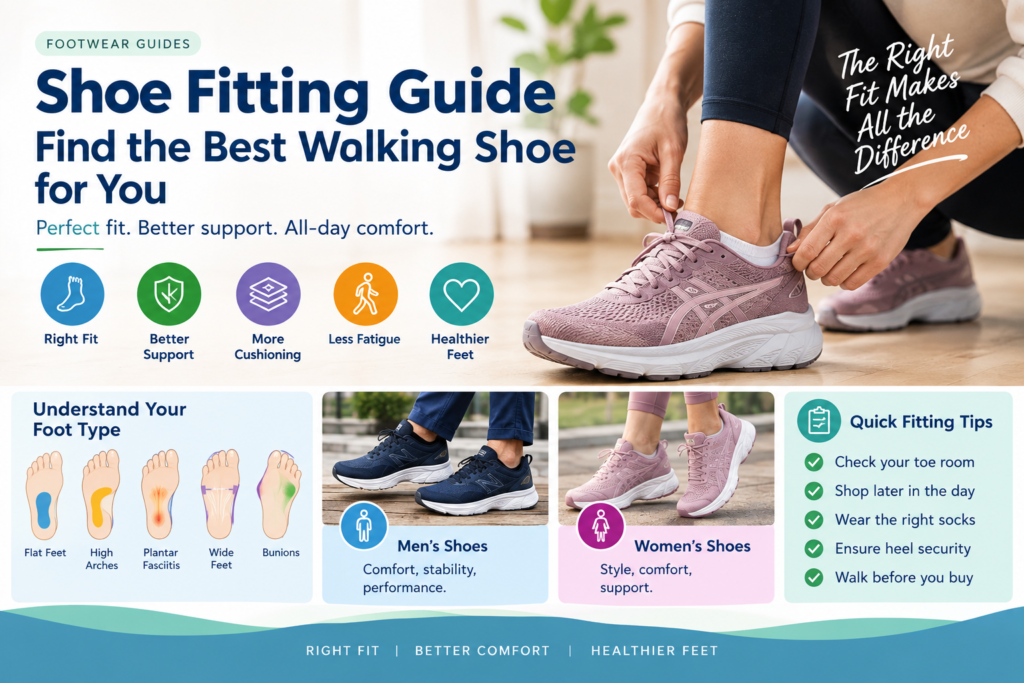
Finding the best walking shoe involves more than choosing a popular brand or a soft, comfortable-looking design. A shoe may look supportive on the shelf but feel unstable once you start walking.
Before buying walking or standing footwear, a few simple stability tests can help you evaluate the shoe’s flexibility, support, heel structure, and overall stability. These checks take only a few minutes and can usually be performed in a store.
Whether you’re shopping for men’s shoes, women’s shoes, fitness walking shoes, work footwear, or everyday walking shoes, understanding stability can help you make a more informed choice.
For a broader overview, first learn about the key features to look for in walking and standing shoes.
Why Stability Matters in a Walking Shoe
Stability helps your feet maintain controlled movement while walking. The right amount of support can improve comfort and reduce unnecessary movement that may contribute to fatigue.
A well-designed walking shoe should balance stability with enough flexibility for natural movement.
Good stability can help with:
- Maintaining better foot alignment
- Controlling excessive foot movement
- Improving balance
- Reducing foot fatigue
- Providing a more secure walking experience
However, maximum rigidity is not always better. A shoe that is excessively stiff may restrict natural movement, while a shoe that bends or twists too easily may not provide enough support.
Stability Features at a Glance
| Stability Feature | Potential Benefit |
|---|---|
| Arch support | Helps provide a supportive platform |
| Stable heel counter | Improves heel security |
| Controlled flexibility | Allows natural movement |
| Torsional stability | Helps control excessive twisting |
| Supportive midsole | Provides structure and cushioning |
1. Perform the Bend Test
The bend test is one of the easiest ways to evaluate a walking shoe.
Your foot naturally bends around the ball of the foot when you walk. A good walking shoe should generally allow controlled flexing in this area rather than folding freely through the middle of the shoe.
How to Perform the Bend Test
- Hold the shoe firmly with both hands.
- Gently bend the front of the shoe upward.
- Observe where the shoe flexes.
- Check whether the midfoot remains relatively supportive.
What You Want to See
Ideally, the shoe should:
- Flex near the forefoot
- Bend around the ball of the foot
- Maintain reasonable structure through the midfoot
- Avoid excessive folding
Warning Signs
Be cautious if the shoe:
- Folds completely in half
- Bends excessively through the arch
- Feels unusually soft or unstable
- Has very little structural support
Bend Test Results
| Result | What It May Indicate |
|---|---|
| Forefoot flex | Appropriate flexibility for walking |
| Moderate flexibility | Good balance of comfort and support |
| Excessive folding | May lack structural support |
| Extremely stiff sole | May feel restrictive |
The bend test should not be used by itself. Cushioning, support, fit, and intended activity are also important when choosing the best walking shoe.
2. Try the Twist Test
The twist test evaluates the shoe’s resistance to torsional movement.
A walking shoe needs some flexibility, but it should not twist excessively from heel to toe. A reasonable level of torsional resistance can help the shoe maintain its structure while you walk.
How to Perform the Twist Test
- Hold the shoe at the heel and forefoot.
- Gently twist the two ends in opposite directions.
- Pay attention to the resistance.
- Check whether the midfoot feels reasonably structured.
What You Want to Feel
A supportive walking shoe should generally:
- Resist excessive twisting
- Maintain its shape
- Provide structure around the midfoot
- Still allow appropriate flexibility
Warning Signs
Be cautious of shoes that:
- Twist extremely easily
- Feel flimsy
- Have very little midfoot structure
- Collapse when moderate pressure is applied
Twist Test Results
| Result | What It May Indicate |
|---|---|
| Moderate resistance | Balanced stability |
| Excessive twisting | May lack support |
| Extremely rigid | May feel restrictive |
| Controlled flexibility | Good balance for walking |
Torsional stability can be especially relevant if you need additional support or spend several hours walking or standing.
If you have flat feet or overpronation, learn more about stability and support features before choosing your next pair.
3. Check the Heel Stability
The heel plays an important role in keeping the foot secure inside the shoe.
A stable heel area can help prevent excessive movement and provide a more controlled feeling during walking.
How to Perform the Heel Flare Check
- Place the shoe on a flat surface.
- Look at the shoe from behind.
- Examine the width of the heel platform.
- Check the heel counter for firmness.
- Make sure the shoe sits evenly on the floor.
What to Look For
Look for:
- A reasonably wide heel platform
- A structured heel counter
- A stable base
- Even construction
- Good heel-to-ground contact
Why Heel Stability Matters
A secure heel can help:
- Improve walking confidence
- Reduce excessive heel movement
- Support balance
- Improve overall shoe stability
- Reduce the feeling of foot fatigue
Heel Stability Comparison
| Heel Design | Stability Potential |
|---|---|
| Wide heel platform | High |
| Moderate heel width | Moderate |
| Very narrow heel base | Lower |
| Firm heel counter | High |
Remember that heel shape is only one part of the overall shoe design. Your heel should also fit securely without excessive slipping.
4. Check the Outsole Grip
Stability is not just about the midsole and heel. The outsole also plays an important role, particularly if you walk on wet, uneven, or unpredictable surfaces.
Before buying men’s shoes or women’s shoes for work or outdoor walking, inspect the outsole.
Look For
- Well-defined tread patterns
- Adequate contact with the ground
- Durable rubber in high-wear areas
- Traction appropriate for your intended surface
Good outsole traction can improve confidence and help reduce the likelihood of slipping.
If you’re buying footwear for work environments, you may also want to learn why anti-slip footwear is important.
5. Check Midsole Firmness
Cushioning and stability need to work together.
A very soft midsole may feel comfortable initially but may not provide the level of structure you prefer. On the other hand, a very firm midsole may feel uncomfortable during extended walking.
The ideal firmness depends on your foot type, activity, and personal preference.
Evaluate the Midsole for:
- Comfortable cushioning
- Adequate support
- Controlled compression
- Stable underfoot feel
For a deeper understanding of cushioning, see our guide to different cushioning levels.
You can also learn about modern cushioning technologies used in today’s walking footwear.
6. Check the Upper Construction
The upper should hold your foot securely without creating uncomfortable pressure.
A good upper can contribute to overall stability by helping prevent unnecessary foot movement inside the shoe.
Look For:
- Secure heel fit
- Comfortable midfoot lockdown
- Breathable materials
- Flexible forefoot
- Quality stitching
- Adjustable lacing
The shoe should feel secure without squeezing your toes or creating pressure points.
If you’re unsure about fit, follow our shoe fitting guide before purchasing.
Stability Checklist Before Buying
Use this quick checklist when trying on a new pair:
| Check | What to Look For |
|---|---|
| Bend test | Controlled flex at the forefoot |
| Twist test | Moderate torsional resistance |
| Heel check | Stable and supportive base |
| Outsole | Appropriate traction |
| Midsole | Balanced cushioning and support |
| Upper | Secure but comfortable fit |
| Walking test | Comfortable and stable movement |
Test Both Shoes
One common mistake is testing only one shoe.
Your left and right feet may differ slightly in size or shape. Always try on both shoes and walk around before making your purchase.
When trying men’s shoes or women’s shoes, check both feet for:
- Toe room
- Heel security
- Width
- Arch comfort
- Pressure points
- Overall stability
For more detailed fitting advice, see how to choose the right shoe size.
Walk Before You Buy
Standing in a shoe for a few seconds does not tell you how it will perform during actual movement.
Walk around the store for several minutes. If possible, walk on different surfaces and try stairs or gentle turns.
Pay attention to:
- Heel slipping
- Toe pressure
- Arch discomfort
- Excessive foot movement
- Midsole feel
- Overall balance
A shoe that feels comfortable while standing may feel completely different once you start walking.
Don’t Choose Cushioning Alone
One of the biggest mistakes shoppers make is assuming that the softest shoe is automatically the best walking shoe.
Cushioning is important, but it should be considered alongside:
- Stability
- Fit
- Support
- Flexibility
- Traction
- Durability
The right balance depends on your foot type and intended activity.
For example, someone who spends long hours standing on hard floors may prioritize cushioning and stability, while a fitness walker may prefer a lighter and more responsive design.
Explore our guide on how to choose shoes based on activity for more guidance.
Stability Considerations for Men’s Shoes
When choosing men’s shoes for walking, commuting, work, or fitness, stability should be evaluated according to the individual’s foot structure and activity.
Look for:
- A secure heel
- Appropriate midfoot support
- Controlled flexibility
- Comfortable cushioning
- Adequate outsole traction
- Correct width and toe room
Men with flat feet or overpronation may particularly benefit from exploring supportive stability footwear.
Stability Considerations for Women’s Shoes
The same stability principles apply when choosing women’s shoes for walking and standing.
Focus on:
- Secure heel fit
- Comfortable arch support
- Adequate toe room
- Appropriate cushioning
- Stable outsole
- Comfortable upper construction
Rather than selecting a shoe simply because it is marketed as a women’s walking shoe, evaluate how well it fits your individual foot.
Common Mistakes When Testing Walking Shoes
Testing Only One Shoe
Always try on both shoes because your feet may not be identical in size or shape.
Standing Without Walking
A shoe can feel comfortable while standing but behave differently during movement. Walk around before buying.
Ignoring Stability
Soft cushioning does not automatically mean a shoe provides adequate stability.
Focusing Only on Brand
Brand reputation can be useful, but fit, comfort, and functionality should take priority.
Ignoring Width
A shoe can have the correct length but still be too narrow. Make sure your toes can move naturally without pressure.
Buying Without Checking the Outsole
If you’ll be walking outdoors or working around slippery surfaces, inspect the outsole for appropriate traction.
When Should You Replace Walking Shoes?
Walking shoes gradually lose cushioning, structure, and traction as they accumulate mileage.
A commonly used guideline is to consider replacement around 300–500 miles, although actual lifespan depends on your body weight, walking habits, shoe construction, surfaces, and signs of wear.
Replace your shoes sooner if you notice:
- Uneven outsole wear
- Flattened cushioning
- Reduced stability
- New foot discomfort
- Visible damage
- Loss of traction
Proper shoe maintenance and lifespan tips can also help you get better performance from your footwear.
Quick Stability Test: 5 Steps
If you only have a few minutes in a store, use this simple process:
Step 1: Bend the shoe and check whether it flexes around the forefoot.
Step 2: Gently twist the shoe and check for reasonable resistance.
Step 3: Examine the heel from behind for a stable base and structured counter.
Step 4: Inspect the outsole for appropriate traction.
Step 5: Put on both shoes and walk around to evaluate real-world comfort and stability.
These simple checks can help you narrow down your options before making a purchase.
How to Choose the Best Walking Shoe
The best walking shoe should provide an appropriate combination of comfort, support, stability, cushioning, flexibility, and traction.
Before buying, consider:
- Your foot type – Flat feet, high arches, wide feet, or other individual characteristics.
- Your activity – Fitness walking, commuting, work, travel, or casual use.
- Shoe fit – Check length, width, toe room, and heel security.
- Stability – Perform the bend, twist, and heel checks.
- Cushioning – Choose a level that feels comfortable for your activity.
- Traction – Match the outsole to the surfaces you normally walk on.
- Comfort – Walk in the shoes before making your final decision.
You can also compare options in our guide to the best walking and standing shoes by category.
Conclusion
Simple stability tests can reveal useful information about a walking shoe before you buy it. The bend test, twist test, heel stability check, outsole inspection, and walking test can help you evaluate whether a shoe provides a suitable balance of flexibility, support, and stability.
Whether you’re shopping for men’s shoes, women’s shoes, or the best walking shoe for everyday use, don’t rely on appearance or brand reputation alone. Check the fit, walk in both shoes, evaluate the structure, and make sure the footwear matches your activity.
Taking a few extra minutes to test a pair before purchasing can help you choose footwear that feels comfortable, secure, and appropriate for your everyday needs.