Introduction
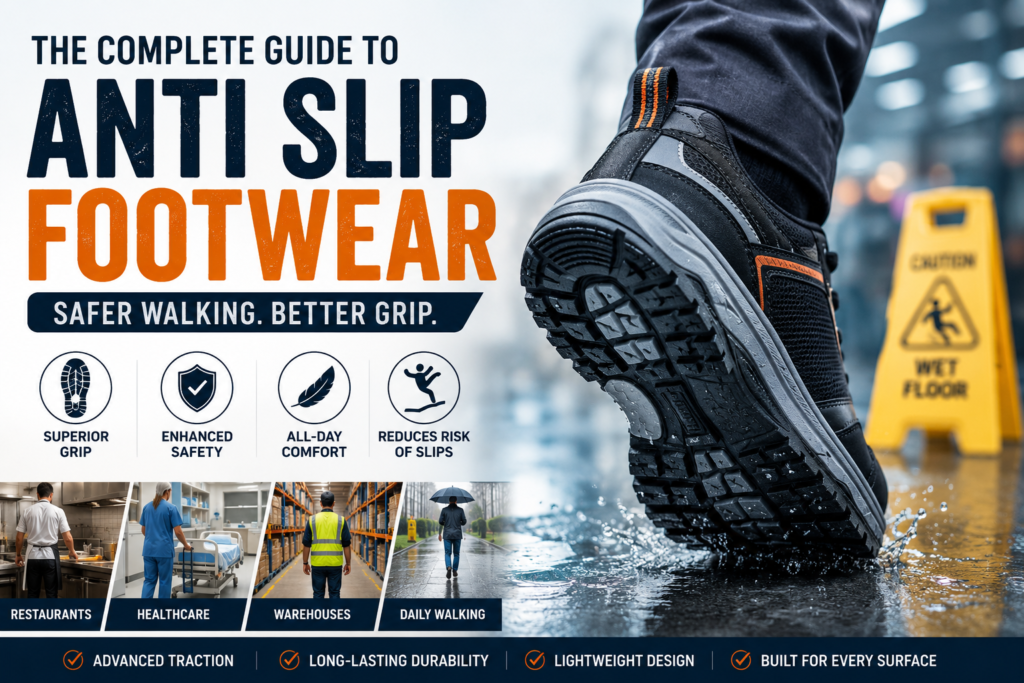
Slippery surfaces can cause unexpected falls at work or during daily activities. Anti slip footwear is designed to provide better grip, improve stability, and reduce the risk of slipping on wet, oily, or smooth floors.
With specialized outsoles and durable traction patterns, anti slip shoes offer all-day comfort and reliable support for workers, walkers, seniors, and anyone who spends long hours on their feet.
In this guide, you’ll learn how anti slip footwear works, its key features, benefits, safety standards, and how to choose the best pair for your needs.
Why Slips and Falls Are a Serious Concern
Slips and falls are among the most common causes of workplace and everyday injuries. Wet floors, loose debris, smooth tiles, oily surfaces, and uneven ground can all reduce the friction between your shoe and the floor. When your footwear cannot maintain enough grip, your foot may slide unexpectedly, causing you to lose balance.
Some common environments where slipping accidents frequently occur include:
- Restaurants and commercial kitchens
- Hospitals and healthcare facilities
- Warehouses and factories
- Retail stores
- Shopping malls
- Airports
- Schools and colleges
- Construction sites
- Parking lots
- Rain-soaked sidewalks
People who walk or stand for several hours every day are especially vulnerable because fatigue can affect balance and foot stability. Choosing footwear with reliable slip resistance significantly improves safety in these environments
The Growing Need for Anti Slip Footwear
As workplaces place greater emphasis on employee safety and individuals become more aware of injury prevention, the demand for anti slip footwear continues to grow. Employers across industries often recommend or require slip-resistant shoes because they help reduce accidents and create safer working conditions.
Beyond professional settings, many people now choose anti slip walking shoes for everyday activities such as:
- Morning and evening walks
- Grocery shopping
- Traveling
- Outdoor activities
- Daily commuting
- Fitness walking
- Running errands
Modern anti slip footwear offers a balance of protection, comfort, and style, making it practical for a wide range of lifestyles.
Benefits of Wearing Anti Slip Footwear
Choosing high-quality anti slip footwear provides several advantages beyond preventing slips.
Improved Grip on Different Surfaces
The specially engineered outsole increases traction on wet, dry, smooth, and slightly uneven surfaces. This helps reduce unexpected slips during everyday movement.
Better Stability and Balance
Enhanced grip allows your feet to stay firmly planted, improving stability while walking, climbing stairs, or standing for long periods.
Reduced Risk of Injuries
Slip-resistant footwear lowers the likelihood of falls that can lead to ankle sprains, knee injuries, fractures, and muscle strains.
Greater Comfort Throughout the Day
Many modern anti slip shoes feature cushioned midsoles, breathable uppers, and lightweight construction. These features help reduce foot fatigue during extended use.
Increased Workplace Confidence
Knowing that your footwear offers dependable traction allows you to move more confidently and efficiently, especially in fast-paced work environments
Who Should Wear Anti Slip Footwear?
Anti slip footwear is designed for anyone who values safety, stability, and comfort. It is especially beneficial for:
- Healthcare professionals
- Restaurant and hotel staff
- Warehouse workers
- Factory employees
- Retail associates
- Delivery personnel
- Security guards
- Teachers
- Senior citizens
- Walkers and fitness enthusiasts
- Travelers
- People with balance concerns
Each of these users faces unique walking conditions, but they all benefit from improved traction and dependable support.
What You’ll Learn in This Guide
This comprehensive guide covers every important aspect of anti slip footwear, including:
- What anti slip footwear is
- How slip-resistant technology works
- The science behind traction and grip
- Different outsole materials and their benefits
- Key features to look for before buying
- Safety certifications and standards
- How to choose the right anti slip footwear
- Maintenance tips to extend shoe life
- Common mistakes buyers should avoid
- Signs it’s time to replace your shoes
By the end of this guide, you’ll have the knowledge needed to select the best anti slip footwear for your lifestyle, workplace, and daily activities.
Why Choosing the Right Anti Slip Footwear Matters
Not all shoes marketed as “slip resistant” provide the same level of performance. Factors such as outsole material, tread pattern, flexibility, cushioning, and fit all influence how well a shoe performs on different surfaces.
Investing in high-quality anti slip footwear is more than purchasing another pair of shoes—it’s an investment in your safety, comfort, and long-term foot health. Whether you’re working a demanding shift, enjoying a daily walk, or navigating slippery outdoor conditions, the right footwear helps you move with confidence and reduces the risk of preventable injuries.
As technology continues to improve, today’s anti slip footwear combines advanced traction systems with lightweight comfort, making it easier than ever to stay safe without compromising on style.
Conclusion
Choosing the right anti slip footwear helps improve safety, stability, and all-day comfort by reducing the risk of slips and falls. Look for features like a slip-resistant outsole, proper cushioning, and a comfortable fit to match your daily needs. Investing in quality anti slip footwear ensures better protection, confidence, and long-lasting performance wherever you go.