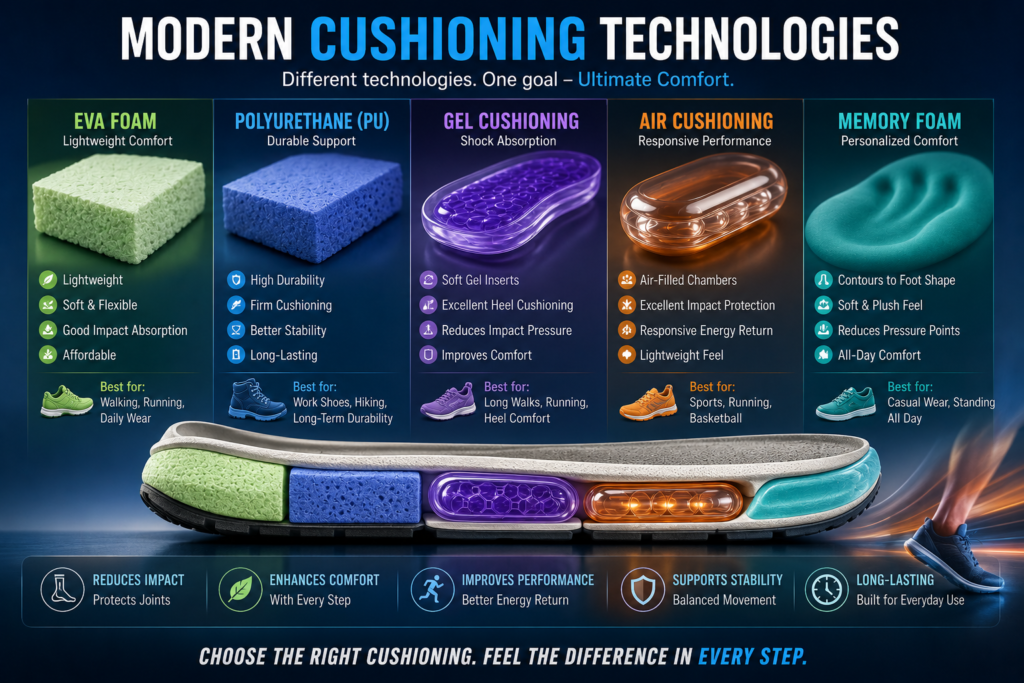
Footwear technology has evolved significantly over the years, offering a wide range of cushioning materials designed to improve comfort, absorb impact, and enhance performance. Shoe manufacturers continuously develop innovative midsole technologies to meet the needs of runners, walkers, athletes, and everyday users.
Understanding the most common cushioning technologies can help you choose footwear that matches your activity level, comfort preferences, and durability requirements.
EVA Foam (Ethylene Vinyl Acetate)
EVA foam is one of the most widely used cushioning materials in modern footwear. It is lightweight, flexible, and provides excellent shock absorption, making it suitable for walking, running, and everyday use.
Key Features
- Lightweight construction
- Soft and comfortable feel
- Good impact absorption
- Flexible design
- Affordable manufacturing cost
Advantages
- Reduces stress on joints during movement
- Provides a smooth and comfortable ride
- Keeps shoes lightweight
- Suitable for most daily activities
Limitations
- Compresses over time with regular use
- Cushioning performance gradually decreases
- Less durable than some premium materials
EVA foam is an excellent choice for people looking for comfortable, lightweight footwear for daily walking, casual running, and general fitness.
Polyurethane (PU) Foam
Polyurethane (PU) foam is denser and more durable than EVA foam. Although slightly heavier, it maintains its shape for a longer period and provides consistent support during prolonged use.
Key Features
- High durability
- Firm cushioning
- Better structural support
- Long-lasting performance
Advantages
- Resists compression better than EVA
- Offers excellent stability
- Ideal for heavier users
- Suitable for long working hours
Limitations
- Heavier than EVA foam
- Less flexible
- May feel firmer during initial use
PU midsoles are commonly found in work shoes, hiking boots, and premium walking footwear where durability and support are more important than lightweight performance.
Gel Cushioning
Gel cushioning systems use soft gel inserts placed inside the midsole to improve shock absorption and reduce impact pressure.
Key Features
- Soft gel-based inserts
- Excellent heel cushioning
- Enhanced pressure distribution
- Comfortable landings
Advantages
- Absorbs repeated impact effectively
- Improves comfort during long-distance activities
- Reduces pressure on sensitive areas of the foot
- Suitable for walking and running
Limitations
- Slightly heavier than standard foam cushioning
- Gel effectiveness may decrease after extended use
Gel cushioning is particularly beneficial for people who experience heel discomfort or spend long hours on hard surfaces.
Air Cushioning
Air cushioning technology uses sealed air units within the midsole to absorb impact while maintaining a lightweight feel.
Key Features
- Air-filled cushioning chambers
- Responsive feel
- Lightweight construction
- Consistent shock absorption
Advantages
- Excellent impact protection
- Provides responsive energy return
- Maintains cushioning over extended periods
- Reduces overall shoe weight
Limitations
- Usually found in higher-priced footwear
- Damaged air units cannot be repaired
Air cushioning is popular in performance running shoes, basketball shoes, and lifestyle sneakers because it combines comfort with responsiveness.
Memory Foam
Memory foam adapts to the shape of your foot, creating a customized fit and improving comfort during everyday wear.
Key Features
- Contours to foot shape
- Soft underfoot feel
- Even pressure distribution
- Enhanced step-in comfort
Advantages
- Excellent comfort for casual use
- Helps reduce pressure points
- Improves overall fit
- Ideal for prolonged standing
Limitations
- Less responsive than athletic foams
- Can retain heat in warm climates
- Compresses over time with frequent use
Memory foam is commonly used in walking shoes, casual footwear, and work shoes where comfort is the primary priority.
Which Cushioning Technology Is Right for You?
Each cushioning material offers unique advantages depending on your lifestyle and activity level.
| Cushioning Technology | Best For | Main Strength |
| EVA Foam | Walking, running, daily wear | Lightweight comfort |
| Polyurethane (PU) | Work shoes, hiking, long-term durability | Stability and durability |
| Gel Cushioning | Long walks, running, heel comfort | Shock absorption |
| Air Cushioning | Sports, running, basketball | Energy return and responsiveness |
| Memory Foam | Casual wear, standing all day | Personalized comfort |
Rather than focusing on a specific technology, consider how the shoe feels during movement and whether it provides the right combination of cushioning, support, and stability for your needs.
Conclusion
Modern cushioning technologies have transformed footwear by offering specialized solutions for different activities and comfort preferences. EVA foam delivers lightweight cushioning, PU foam provides long-lasting support, gel systems improve shock absorption, air cushioning enhances responsiveness, and memory foam offers personalized comfort. Understanding these technologies helps you make informed purchasing decisions and select footwear that supports your feet, improves performance, and provides lasting comfort throughout your daily activities.