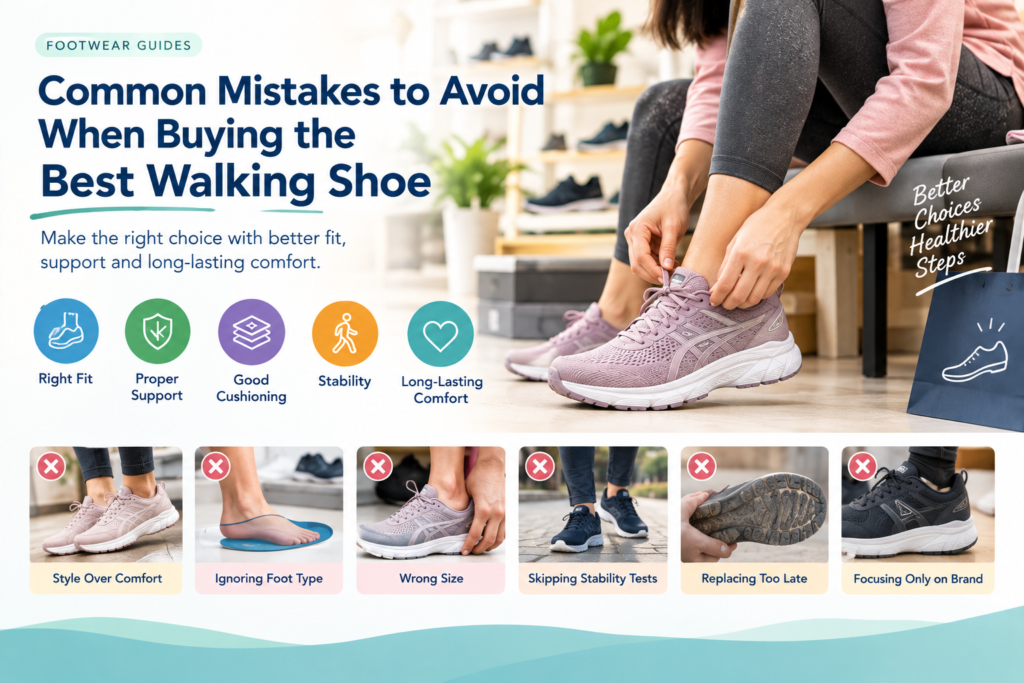
Choosing the right walking shoes is about more than finding an attractive design or selecting a familiar brand. The best walking shoe should provide the right combination of comfort, support, cushioning, stability, fit, and durability for your daily needs.
Whether you spend hours walking, standing at work, commuting, exercising, or running errands, the wrong footwear can lead to discomfort, foot fatigue, and poor walking performance.
By understanding the most common buying mistakes, you can make a smarter choice and find men’s shoes or women’s shoes that provide lasting comfort and support.
Why Avoiding Walking Shoe Buying Mistakes Matters
A good walking shoe should:
- Fit your feet comfortably
- Provide appropriate cushioning and support
- Match your walking and daily activities
- Offer enough room for natural foot movement
- Provide good stability and grip
- Feel comfortable during extended wear
- Be suitable for your individual foot shape
For a deeper understanding of what to look for, explore our guide to key features to look for in walking and standing shoes.
Making the wrong choice can result in unnecessary discomfort and may cause you to replace your shoes sooner than expected.
1. Prioritizing Style Over Comfort
One of the most common mistakes is choosing a shoe because it looks good rather than because it feels good.
Modern men’s shoes and women’s shoes are available in many stylish designs, but appearance should not be the only deciding factor.
Why This Can Be a Problem
A stylish shoe may not provide:
- Adequate cushioning
- Proper arch support
- Good heel stability
- Enough toe room
- A comfortable fit
- Suitable outsole grip
Wearing footwear that does not support your feet properly can lead to discomfort and fatigue, especially when walking or standing for long periods.
A Better Approach
When comparing shoes, consider comfort and performance first. Look for a balance of:
- Comfort
- Support
- Cushioning
- Stability
- Breathability
- Durability
- Style
The best walking shoe is one that looks good and supports your feet throughout the day.
2. Ignoring Your Foot Type
No two feet are exactly alike. Your arch height, foot width, and overall foot shape can influence how a shoe feels and performs.
Common foot types include:
- Flat feet
- Low arches
- Neutral arches
- High arches
- Wide feet
- Narrow feet
Choosing footwear without considering your foot type may result in poor support, pressure points, or discomfort.
A Better Approach
Understand your foot shape before purchasing new shoes. Then look for a design that provides the appropriate level of support and space.
For more guidance, read our article on how to choose shoes based on foot type.
This is especially useful when comparing different styles of men’s shoes and women’s shoes, as individual fit can vary significantly between models.
3. Choosing the Wrong Shoe Size
A shoe can have excellent cushioning and support but still feel uncomfortable if the size is wrong.
Many people assume they wear the same size in every brand or model. However, shoe shapes and sizing can vary.
Signs Your Shoes Are Too Small
- Toes feel cramped
- Pressure around the forefoot
- Blisters
- Toenail discomfort
- Numbness or tingling
- Restricted foot movement
Signs Your Shoes Are Too Large
- Heel slipping
- Excessive foot movement
- Poor stability
- Difficulty maintaining a secure fit
- Increased friction and blisters
How to Get a Better Fit
When trying walking shoes:
- Try on both shoes.
- Wear the socks you normally use.
- Leave enough space in front of your longest toe.
- Check that your heel stays secure.
- Walk around before deciding.
- Make sure the shoe does not create pressure points.
For more practical advice, see our Shoe Fitting Guide and learn how to choose the right shoe size.
4. Buying Shoes Without Considering Your Activity
Not every shoe is designed for the same purpose.
A person who spends several hours standing at work may have different requirements from someone who takes short daily walks or uses shoes for recreational activities.
Before buying, consider where and how you will use the footwear.
Think About Your Daily Activities
Ask yourself:
- Do I walk long distances?
- Do I stand for several hours?
- Do I use my shoes indoors or outdoors?
- Do I walk on hard surfaces?
- Do I need additional grip?
- Do I need extra cushioning?
- Do I need lightweight footwear?
Choosing shoes based on your lifestyle can help you find a more suitable option.
Learn more about how to choose shoes based on activity before making your purchase.
5. Buying Shoes Without Testing Their Stability
Another common mistake is buying walking shoes without checking how stable they feel.
A shoe should allow natural movement while providing enough support to keep your foot secure.
Simple checks can help you evaluate a shoe before purchasing.
Try These Simple Tests
Bend Test:
Check where the shoe flexes. A walking shoe should generally flex appropriately around the forefoot rather than folding excessively through the middle.
Twist Test:
Gently twist the shoe. Some resistance can indicate useful midfoot structure and stability.
Heel Check:
Look at the heel counter and heel base. The heel should feel secure without being excessively rigid or uncomfortable.
Outsole Check:
Examine the outsole pattern and rubber coverage for suitable traction.
You can also read our guide on simple stability tests before buying for a more detailed checklist.
6. Choosing Cushioning Without Considering Your Needs
More cushioning does not automatically mean a better walking shoe.
Different people have different comfort preferences and footwear requirements. Some may prefer a softer underfoot feel, while others may prefer a firmer and more stable platform.
The right cushioning should complement your:
- Walking habits
- Body weight
- Foot type
- Surface
- Activity level
- Personal comfort preference
Read our guide to understanding cushioning levels to learn how different cushioning levels can affect comfort and support.
7. Focusing Only on Brand Reputation
A well-known brand can offer quality footwear, but brand reputation alone should not determine your purchase.
Different models from the same manufacturer can have completely different:
- Fits
- Cushioning systems
- Heel structures
- Outsoles
- Support features
- Weight
- Materials
Instead of choosing a shoe simply because of its brand name, evaluate whether the specific model suits your feet and daily activities.
When comparing men’s shoes or women’s shoes, focus on the actual features and fit of the shoe rather than the logo.
8. Ignoring the Outsole and Grip
Walking shoes need more than a comfortable upper and cushioned midsole. The outsole plays an important role in traction and stability.
If you regularly walk on smooth, wet, or challenging surfaces, outsole grip becomes even more important.
Look for:
- Appropriate tread patterns
- Durable outsole materials
- Good surface contact
- Reliable traction for your environment
If you need footwear for work environments where slip resistance matters, explore our comprehensive guide to anti-slip footwear.
9. Buying Shoes Without Trying Both Feet
It is common for one foot to be slightly different from the other.
Trying only one shoe may therefore give you an incomplete idea of how the pair actually fits.
Always Check Both Shoes
When possible:
- Put on both shoes.
- Stand naturally.
- Walk several steps.
- Check the toe area.
- Check your heel movement.
- Notice any pressure points.
- Compare the overall comfort of both feet.
The best walking shoe should feel secure and comfortable on both feet.
10. Ignoring Signs of Wear
Even a high-quality walking shoe eventually loses some of its original performance.
Cushioning can compress, outsole tread can wear down, and the upper may lose its structure over time.
Signs Your Walking Shoes May Need Replacing
Look for:
- Flattened or compressed cushioning
- Uneven outsole wear
- Reduced traction
- Visible damage
- Loss of structural support
- Increased foot fatigue
- New discomfort while walking
- A noticeable change in how the shoe feels
Instead of replacing shoes based only on age, pay attention to their condition and how they perform.
For practical care advice, read our guide on maintenance and lifespan tips.
11. Wearing the Wrong Shoes for Your Footwear Needs
Walking shoes are not one-size-fits-all solutions.
Someone looking for everyday men’s shoes may need a different combination of support, cushioning, and durability from someone choosing women’s shoes for long hours of standing.
The right choice depends on:
- Foot shape
- Daily activity
- Walking distance
- Surface
- Fit preference
- Required support
- Cushioning preference
Instead of looking for a universally perfect shoe, focus on finding the shoe that works best for your feet and routine.
Quick Walking Shoe Buying Checklist
Before purchasing your next pair, ask yourself:
- Does the shoe fit comfortably?
- Is there enough room for my toes?
- Does my heel stay secure?
- Does the shoe suit my foot type?
- Is the cushioning appropriate for my needs?
- Does it provide enough stability?
- Is the outsole suitable for my walking environment?
- Have I tested both shoes?
- Does it match my daily activities?
- Does the shoe feel comfortable when I walk?
If you can confidently answer yes to these questions, you are much more likely to choose a suitable walking shoe.
How to Choose the Best Walking Shoe
Finding the best walking shoe does not mean choosing the most expensive or most popular model. It means finding footwear that matches your feet, activities, and comfort requirements.
Before buying, focus on these five areas:
1. Fit
Your shoes should feel secure without squeezing your feet.
2. Support
Choose support that works with your foot type and walking style.
3. Cushioning
Select cushioning based on your comfort needs and daily activities.
4. Stability
The shoe should provide a stable platform without unnecessarily restricting natural movement.
5. Durability
Look for quality materials and construction that can withstand your regular use.
For a broader overview, explore our complete guide to choosing the right footwear.
Best Walking Shoes for Men and Women
The ideal footwear can vary between individuals, so both men’s shoes and women’s shoes should be selected based on fit, comfort, support, and intended use.
Rather than choosing footwear simply because it is marketed for men or women, consider the actual shape and construction of the shoe and how well it suits your feet.
You can also explore our guide to best walking and standing shoes by category when comparing options for different needs.
Conclusion
Avoiding common buying mistakes can make it much easier to find comfortable, supportive walking footwear. Choosing style over comfort, ignoring your foot type, selecting the wrong size, skipping stability tests, overlooking your activity needs, and wearing worn-out shoes can all affect your walking experience.
Whether you are shopping for men’s shoes, women’s shoes, or everyday walking footwear, focus on fit, cushioning, support, stability, grip, and durability.
The best walking shoe is ultimately the one that fits your feet comfortably, supports your daily activities, and helps you walk with confidence and comfort.