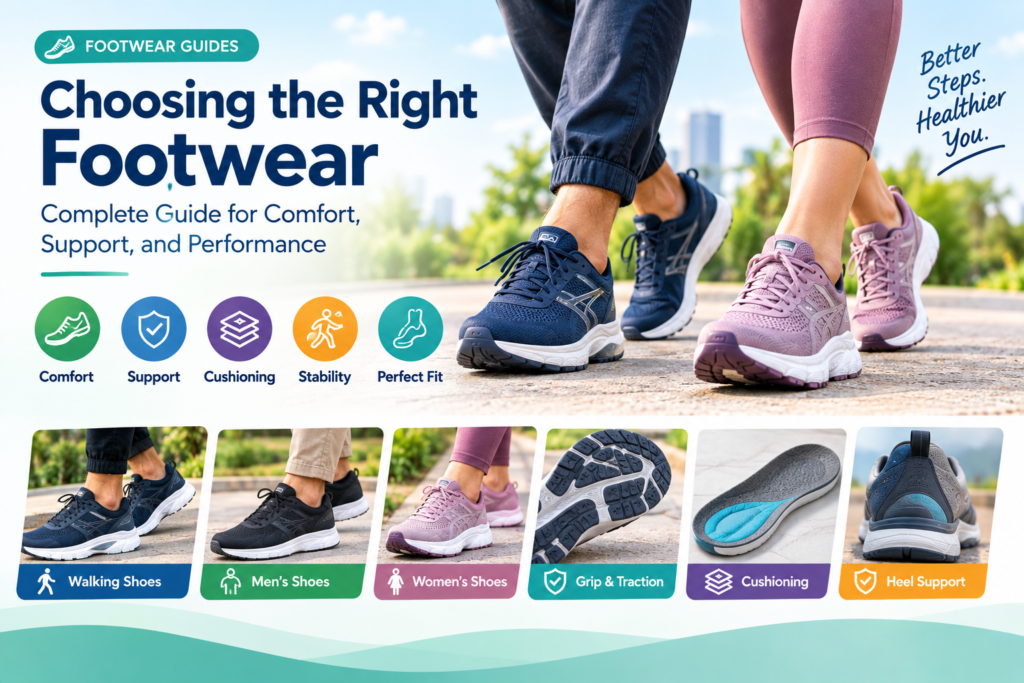
Choosing the right footwear is essential for everyday comfort, foot support, movement, and long-term durability. Whether you spend hours walking, standing at work, exercising, running errands, or participating in sports, the shoes you wear can significantly affect how your feet feel throughout the day.
The best walking shoe is not simply the most attractive or expensive option. It should match your foot shape, activity level, cushioning preference, support requirements, and daily environment.
Similarly, when choosing men’s shoes or women’s shoes, it is important to look beyond appearance and consider fit, stability, cushioning, flexibility, grip, and overall comfort.
This complete guide explains how to choose the right footwear for different needs, including walking and standing shoes, support and cushioning, foot type, proper fitting, activity-specific requirements, and maintenance.
Why Choosing the Right Footwear Matters
Your feet support your entire body while you stand, walk, run, and move. The right footwear helps provide a comfortable foundation for these everyday activities.
Well-designed footwear can help distribute pressure more evenly, absorb impact, improve stability, and support natural movement.
Benefits of Wearing the Right Footwear
Better Everyday Comfort
Comfortable footwear can reduce pressure points and help minimize foot fatigue during extended periods of walking or standing.
If you spend several hours on your feet, choosing footwear with appropriate cushioning and support becomes especially important.
For more guidance, explore our article on key features to look for in walking and standing shoes.
Improved Walking Experience
A properly fitted walking shoe should allow your foot to move naturally while providing adequate support and cushioning.
The right combination of flexibility, stability, and cushioning can make everyday walking more comfortable.
Better Stability and Balance
Supportive footwear can provide a stable platform for your feet and help you feel more secure while walking on different surfaces.
Features such as a structured heel counter, stable midsole, and suitable outsole can contribute to better overall stability.
Reduced Foot Fatigue
Shoes that match your activity and foot shape can help reduce unnecessary pressure on the feet during long periods of use.
This is particularly important for people who walk or stand for much of their working day.
Risks of Choosing the Wrong Shoes
Choosing footwear based only on style, price, or brand popularity can result in a poor fit or inadequate support.
Common problems associated with unsuitable footwear may include:
- Foot soreness
- Blisters
- Pressure points
- Arch discomfort
- Heel discomfort
- Excessive foot fatigue
- Poor stability
- Reduced walking comfort
The right footwear should be selected according to how and where you plan to use it.
Understanding Cushioning and Support
Cushioning and support are two important features to consider when choosing the right footwear. Although they work together, they have different purposes.
What Is Cushioning?
Cushioning refers to the materials and construction used to soften impact and improve underfoot comfort.
Different activities and personal preferences may require different cushioning levels.
Light Cushioning
Light cushioning generally provides a more responsive and closer-to-the-ground feel.
It can be suitable for people who prefer:
- A lightweight feel
- Greater ground awareness
- More responsive movement
- Flexible footwear
Moderate Cushioning
Moderate cushioning provides a balance between comfort and responsiveness.
This level can work well for everyday walking, commuting, casual use, and general activities.
For a detailed explanation, read our guide to understanding cushioning levels.
Maximum Cushioning
Higher levels of cushioning focus more heavily on underfoot comfort and impact absorption.
They can be useful for:
- Long-distance walking
- Extended standing
- Long working hours
- Recovery-focused activities
- People who prefer a softer underfoot feel
You can also learn more about choosing cushioning based on your needs.
Cushioning vs. Support: What’s the Difference?
It is easy to assume that a softer shoe automatically provides better support, but cushioning and support serve different purposes.
Cushioning
Cushioning primarily focuses on:
- Underfoot comfort
- Impact absorption
- Softness
- Reducing the harsh feel of hard surfaces
Support
Support focuses more on:
- Foot stability
- Secure positioning
- Movement control
- Maintaining a stable platform
A well-designed walking shoe should provide an appropriate balance between cushioning and support based on the wearer’s needs.
For a deeper look at this topic, explore our guide to footwear cushioning and support.
Why Stability Matters in Walking Shoes
Stability is particularly important when selecting footwear for regular walking or extended standing.
A stable shoe should feel secure underfoot while still allowing comfortable natural movement.
Useful stability features may include:
- A supportive midsole
- A secure heel structure
- A stable outsole
- Appropriate shoe width
- A well-constructed upper
- Good contact with the ground
If you want to evaluate stability before buying, see our guide to simple stability tests before buying.
You can also learn more about stability and support features in footwear.
Consider Your Foot Type
Your foot shape plays an important role in determining which shoes feel comfortable.
Common foot characteristics include:
- Flat feet
- Low arches
- Neutral arches
- High arches
- Wide feet
- Narrow feet
A shoe that feels comfortable for one person may not work equally well for another.
Why Foot Type Matters
Your foot shape can influence:
- Where pressure is placed
- How your foot moves inside the shoe
- How much support you prefer
- The amount of room required in the toe box
- Overall comfort
Before choosing the best walking shoe, consider your individual foot shape rather than simply copying someone else’s footwear choice.
For more information, read how to choose shoes based on foot type.
Choose Shoes According to Your Activity
One of the most important rules when buying footwear is to consider what you will actually do while wearing it.
Different activities place different demands on your feet and shoes.
Walking
Walking shoes should generally prioritize:
- Comfortable cushioning
- Appropriate flexibility
- Stability
- Secure fit
- Reliable outsole traction
If you are searching for the best walking shoe, start by considering your walking distance, walking surface, foot type, and comfort preferences.
Standing for Long Hours
People who stand for extended periods may benefit from:
- Comfortable cushioning
- Stable construction
- Supportive footbeds
- Breathable uppers
- Durable outsoles
Running
Running footwear is designed around repetitive impact and forward movement. Running shoes may have different cushioning and construction from everyday walking shoes.
Sports and Training
Sports footwear should be selected according to the specific activity. Court sports, gym workouts, and outdoor activities may require different levels of lateral support, flexibility, grip, and stability.
For more guidance, read how to choose shoes based on activity.
How to Find the Best Walking Shoe
Finding the best walking shoe starts with understanding your own requirements rather than searching for one universal model.
Consider these factors before buying:
1. Fit
The shoe should feel comfortable without squeezing your toes or allowing excessive movement.
2. Cushioning
Choose cushioning based on how much time you spend walking or standing and your personal comfort preference.
3. Support
Look for an appropriate level of support based on your foot shape and walking requirements.
4. Stability
The shoe should provide a secure and stable platform without feeling unnecessarily restrictive.
5. Flexibility
A walking shoe should allow natural movement, particularly through the forefoot.
6. Grip
Choose an outsole with suitable traction for the surfaces where you normally walk.
7. Breathability
A breathable upper can improve comfort during extended wear, particularly in warm conditions.
8. Durability
Quality construction and durable materials can help your footwear perform consistently over time.
For a broader overview, read our guide to best walking and standing shoes by category.
Choosing the Right Men’s Shoes
When selecting men’s shoes, comfort and functionality should be considered alongside appearance.
Depending on the intended use, men’s footwear may need different combinations of:
- Cushioning
- Support
- Stability
- Flexibility
- Breathability
- Grip
- Durability
For everyday walking, commuting, or extended standing, prioritize a comfortable fit and appropriate support instead of choosing solely based on appearance.
You can explore our men’s footwear guide for more information.
Choosing the Right Women’s Shoes
The same principles apply when choosing women’s shoes. Rather than focusing only on design, consider how the shoe fits your foot and supports your daily activities.
Look for:
- Comfortable fit
- Adequate toe room
- Appropriate cushioning
- Secure heel fit
- Suitable support
- Good outsole grip
- Breathable materials
Whether you need casual footwear, walking shoes, or shoes for long working hours, selecting a design that matches your individual needs can improve everyday comfort.
Getting the Right Shoe Fit
Even a high-quality shoe may feel uncomfortable if it is the wrong size or shape.
Signs of a Good Fit
A properly fitting shoe should:
- Hold the heel securely
- Allow your toes to move naturally
- Avoid pressure points
- Feel comfortable while walking
- Provide enough room in the forefoot
- Keep your foot secure without excessive tightness
Try on both shoes and walk around before making a purchase.
For more detailed guidance, read our Shoe Fitting Guide.
You can also learn how to choose the right shoe size.
Consider the Outsole and Grip
The outsole is one of the most important parts of footwear because it directly interacts with the walking surface.
A suitable outsole should provide:
- Adequate traction
- Reliable ground contact
- Appropriate flexibility
- Durability
- Grip suited to your environment
If you frequently walk on smooth or potentially slippery surfaces, consider footwear designed with appropriate slip resistance.
Our anti-slip footwear guide explains how slip-resistant footwear works and what features to look for.
Don’t Choose Footwear Based Only on Appearance
Style is important, but it should not be the only consideration.
A visually attractive shoe may not provide the fit, cushioning, stability, or support your feet require.
When comparing men’s shoes or women’s shoes, evaluate the complete shoe rather than focusing only on its design.
A practical approach is to consider:
Fit + Comfort + Support + Cushioning + Stability + Grip + Durability
This combination can help you make a more informed footwear decision.
How to Maintain Your Footwear
Choosing the right shoes is only the first step. Proper maintenance can help preserve their appearance and performance.
Simple maintenance practices include:
- Clean shoes regularly
- Allow footwear to dry naturally
- Avoid storing damp shoes
- Rotate between pairs when possible
- Inspect the outsole regularly
- Check for damaged or compressed cushioning
- Replace footwear when performance noticeably declines
For more practical advice, read our guide to maintenance and lifespan tips.
When Should You Replace Your Shoes?
Walking shoes gradually change with use. Even when they still look acceptable, cushioning, grip, and structural support may decline.
Watch for signs such as:
- Flattened cushioning
- Uneven outsole wear
- Reduced traction
- Loose or damaged upper materials
- Reduced comfort
- Increased foot fatigue
- New discomfort during walking
Rather than relying only on a specific replacement date, pay attention to how your footwear looks, feels, and performs.
Quick Checklist for Choosing the Right Footwear
Before buying your next pair, ask yourself:
- Does the shoe fit comfortably?
- Is there enough room for my toes?
- Does the heel stay secure?
- Does the shoe suit my foot type?
- Is the cushioning appropriate for my needs?
- Does it provide enough stability?
- Is the outsole suitable for my walking environment?
- Does it match my activity?
- Does it feel comfortable when walking?
- Is the construction durable enough for regular use?
If the answer is yes to most of these questions, you are on the right track toward finding suitable footwear.
Conclusion
Choosing the right footwear requires more than selecting a popular brand or attractive design. The best choice depends on your foot type, activity level, fit, cushioning preference, support requirements, and walking environment.
Whether you are searching for the best walking shoe, comfortable men’s shoes, or supportive women’s shoes, focus on the features that matter most for your daily routine.
A good pair of shoes should provide a comfortable fit, appropriate cushioning, reliable support, stability, suitable traction, and enough durability for regular use.
By understanding these factors and maintaining your footwear properly, you can make smarter buying decisions and enjoy greater comfort and confidence with every step.