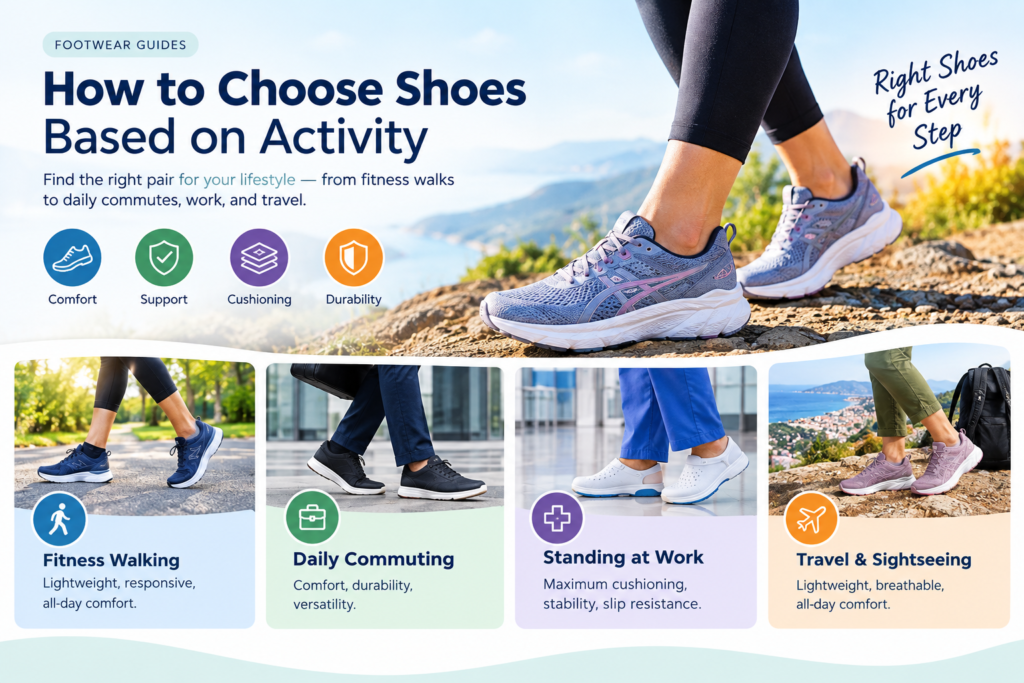
The best walking and standing shoes depend not only on your foot type but also on how you use them. A shoe designed for fitness walking may not provide the same benefits as one intended for healthcare workers or travelers. Along with your activity level, it is also important to choose shoes based on your foot type to ensure better comfort and support.When choosing men’s shoes for daily commuting, look for a comfortable fit, durable outsole, breathable materials, and enough cushioning for extended walking.
Your daily activities determine the level of cushioning, support, durability, and traction required. Choosing shoes based on activity helps maximize comfort, improve performance, and reduce fatigue. Understanding the key features of walking and standing shoes can help you choose the right level of cushioning, support, stability, and durability for your daily activities.
Activity-Based Shoe Selection Guide
| Activity | Key Requirements |
| Fitness Walking | Lightweight, responsive cushioning |
| Daily Commuting | Comfort, durability, versatility |
| Standing on Concrete Floors | Maximum cushioning and stability |
| Travel & Sightseeing | Lightweight, breathable, all-day comfort |
Fitness Walking
Fitness walking involves repetitive movement over long distances. Whether you walk for exercise, weight management, or cardiovascular health, your shoes should provide responsiveness and support. Understanding the benefits of footwear cushioning can help fitness walkers select shoes that provide better impact absorption and long-distance comfort.
Studies show that brisk walking can burn approximately 200–400 calories per hour depending on body weight, walking speed, and terrain. Proper footwear helps maintain comfort and reduce stress on the feet during extended activity.Before choosing a fitness walking shoe, compare the different cushioning levels]available to find the right balance between responsiveness and comfort.
What to Look For
Lightweight Construction
Heavy shoes require more energy with every step. Lightweight designs help improve walking efficiency.
Energy Return Technology
Modern foam technologies return energy during movement, helping reduce fatigue.
Responsive Cushioning
Responsive midsoles provide comfort while maintaining forward momentum.
Recommended Shoe Features
- Lightweight foam midsoles
- Breathable mesh upper
- Flexible sole design
- Responsive cushioning
Best Shoes for Fitness Walking
- New Balance 1080 v15
- ASICS Gel Nimbus
- HOKA Clifton
- On Cloudtilt
Learn more in our guide on Best Walking Shoes for Fitness and Exercise.
Daily Commuting
Daily commuters often spend hours walking between public transportation, offices, parking areas, and city streets. Daily commuters should also choose shoes based on their lifestyle, especially when their footwear needs to transition between walking, work, and casual activities.
Unlike fitness walking, commuting requires a balance of comfort, style, and durability.
What to Look For
All-Day Comfort
Your shoes should remain comfortable from morning until evening.
Versatile Design
A versatile design allows shoes to transition between work and casual environments.
Durability
Daily commuting exposes shoes to various surfaces and weather conditions.
Recommended Shoe Features
- Durable outsole
- Moderate cushioning
- Stylish appearance
- Breathable materials
Best Shoes for Daily Commuting
- On Cloud 6
- Nike Promina
- Skechers GO WALK
- HOKA Transport 2
Daily Commuting Statistics
| Commuting Fact | Data |
| Average walking distance during daily commute | 1–3 miles |
| Average office worker walking time per day | 30–60 minutes |
| Daily steps accumulated through commuting | 2,000–5,000 steps |
Standing on Concrete Floors
Standing for long periods on hard surfaces places significant stress on the feet, knees, hips, and lower back. For people who stand on hard surfaces for long periods, proper footwear cushioning and support can play an important role in reducing fatigue and improving comfort.
Healthcare professionals, teachers, warehouse workers, retail employees, and hospitality staff often spend 8–12 hours standing during a typical shift. Shoes designed for long hours on concrete should include strong stability and support features to help provide a more secure and comfortable walking experience.
Why Concrete Floors Are Challenging
Concrete does not absorb impact effectively. This means your body absorbs most of the shock generated while standing and walking.
What to Look For
Maximum Cushioning
Thick midsoles help reduce pressure on the feet and joints.
Stability
Supportive footwear improves posture and reduces fatigue.
Shock Absorption
Quality cushioning protects the feet from repetitive impact.
Recommended Shoe Features
- High-stack cushioning
- Arch support
- Slip-resistant outsole
- Stable heel platform
Best Shoes for Standing All Day
- HOKA Bondi SR
- Dansko XP 2.0
- Kuru Atom 2
- New Balance 928
Workplace Standing Statistic
| Workplace Standing Fact | Data |
| Typical healthcare shift | 8–12 hours |
| Average retail employee standing time | 6–10 hours |
| Workers reporting foot pain after prolonged standing | More than 50% |
| Increased fatigue risk on hard floors | Significantly higher than carpeted surfaces |
Read our complete guide on Best Shoes for Standing All Day at Work.
Travel and Sightseeing
Travel often involves significantly more walking than normal daily routines. Tourists can easily accumulate 10,000–20,000 steps per day while exploring cities, attractions, and destinations.When selecting women’s shoes for travel and sightseeing, prioritize lightweight construction, breathable materials, cushioning, and all-day comfort.
The wrong footwear can quickly turn an enjoyable trip into an uncomfortable experience.
What to Look For
Lightweight Design
Travel shoes should minimize fatigue during long walking sessions.
Breathability
Breathable materials help keep feet cool in different climates.
Long-Distance Comfort
Comfort becomes increasingly important as daily step counts rise.
Recommended Shoe Features
- Lightweight construction
- Cushioned midsole
- Breathable upper
- Durable outsole
Best Shoes for Travel
- HOKA Transport 2
- New Balance 1080
- On Cloudtilt
- Skechers GO WALK
Travel Walking Statistics
| Travel Fact | Data |
| Average sightseeing steps per day | 10,000–20,000 |
| Average walking distance during city tourism | 5–10 miles |
| Common complaint among travelers | Foot fatigue |
| Most important travel shoe feature | All-day comfort |
Explore our guide on Best Walking Shoes for Travel and Vacation before your next trip.
Activity Comparison Table
| Activity | Cushioning Level | Support Level | Weight Preference |
| Fitness Walking | High | Medium | Lightweight |
| Daily Commuting | Medium | Medium | Lightweight |
| Standing at Work | Maximum | High | Medium |
| Travel & Sightseeing | High | Medium | Lightweight |
Section Conclusion
The best walking and standing shoes should match your daily activities. Fitness walkers benefit from lightweight and responsive footwear, while workers standing on hard floors require maximum cushioning and stability. Commuters need versatile shoes that combine comfort and durability, and travelers should prioritize lightweight designs capable of supporting thousands of steps per day. Ultimately, the best walking shoe is one that matches your activity level, provides adequate support and cushioning, and remains comfortable throughout the day.
By choosing shoes specifically designed for your lifestyle and activity level, you can improve comfort, reduce fatigue, and protect your feet during everyday movement.