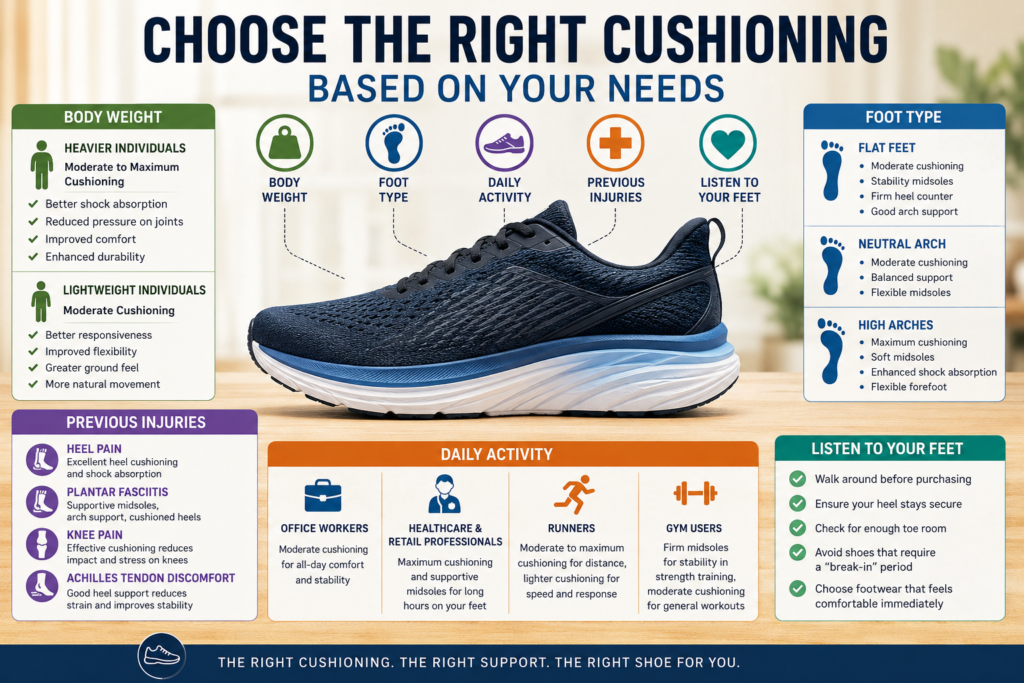
Choosing the right footwear is not simply about selecting the softest pair available. The right level of cushioning depends on your body weight, foot type, daily activities, comfort preferences, and previous foot or joint concerns. Shoes that feel comfortable for one person may not provide the same experience for someone else.
Whether you are searching for the best walking shoe, a comfortable women shoe, or a supportive men shoe, understanding different cushioning levels can help you make a more informed decision.
Cushioning helps absorb impact and distribute pressure, while support and stability features help maintain a secure, balanced fit. The ideal footwear combines these features according to your individual needs.
In this guide, we explain how to choose shoe cushioning based on body weight, foot type, activity level, and personal comfort.
1. Choose Cushioning Based on Your Body Weight
Body weight influences the forces placed on your feet during walking, running, and standing. However, the ideal cushioning level also depends on shoe design, walking style, and personal preference.
For Heavier Individuals
People with a higher body weight may prefer moderately or highly cushioned footwear that feels comfortable under repeated loading.
Look for these features:
- Effective shock absorption
- A supportive, well-constructed midsole
- A stable base that does not feel excessively soft
- Durable materials suitable for regular use
- Comfortable cushioning for extended walking or standing
A well-balanced midsole can help distribute pressure and improve underfoot comfort. When choosing the best walking shoe, avoid focusing on cushioning thickness alone. A thicker sole does not automatically provide better support or greater comfort.
For Lightweight Individuals
People with a lighter body weight may find moderate cushioning comfortable for everyday activities. Some prefer a more flexible shoe that allows them to feel the ground more naturally.
Consider footwear that offers:
- Balanced cushioning
- A flexible forefoot
- A secure heel fit
- Suitable stability
- Comfortable movement during everyday activities
The goal is to find a shoe that feels responsive and comfortable without unnecessary bulk or instability.
For more guidance, read our article on understanding cushioning levels.
2. Choose Cushioning Based on Your Foot Type
Your foot shape and arch structure can influence how pressure is distributed during movement. Choosing footwear that fits your foot comfortably is an important part of finding the right cushioning.
Flat Feet
People with flat feet may experience inward rolling of the foot, known as overpronation. However, not everyone with flat feet requires additional stability features.
Depending on individual comfort and walking mechanics, useful features may include:
- Moderate cushioning
- A stable midsole
- A secure heel counter
- A comfortable footbed
- Appropriate arch support
If you have flat feet, try shoes that feel stable without creating excessive pressure under the arch.
Neutral Arches
People with neutral arches may find neutral walking shoes with balanced cushioning and support comfortable for everyday use.
Look for:
- Moderate cushioning
- Balanced flexibility
- A comfortable fit around the midfoot
- A secure heel
- A smooth, natural walking feel
These features can make neutral shoes a practical option for commuting, shopping, and everyday walking.
High Arches
High arches may concentrate pressure around the heel and forefoot because less of the foot contacts the ground. Some people with high arches prefer footwear with additional cushioning and a flexible forefoot.
Consider:
- Moderate to generous cushioning
- Comfortable heel padding
- A flexible forefoot
- A well-fitting footbed
- A stable platform that feels comfortable while walking
The best choice depends on how the shoe feels and how well it accommodates your foot.
Learn more in our guide to choosing shoes based on foot type.
3. Choose Cushioning Based on Previous Injuries or Discomfort
If you have experienced foot pain or lower-body discomfort, cushioning is one factor to consider when selecting footwear. The right shoe may improve comfort, but cushioning alone cannot diagnose or treat an injury.
Heel Pain
People experiencing heel discomfort may prefer shoes with adequate heel cushioning and a supportive midsole. A secure fit can also help prevent unwanted movement inside the shoe.
Plantar Fasciitis
People with plantar fasciitis may find footwear with a comfortable cushioned heel, appropriate arch support, and a stable midsole helpful for everyday comfort.
The ideal design varies between individuals, so persistent or worsening pain should be assessed by a qualified healthcare professional.
Knee Discomfort
People with knee discomfort may prefer shoes that feel comfortable and stable during walking. Although cushioning affects impact forces, its effects on knee symptoms vary, and softer footwear is not automatically better for everyone.
Achilles Tendon Discomfort
When experiencing Achilles tendon discomfort, avoid assuming that more cushioning will solve the problem. Heel height, shoe design, activity level, and the nature of the condition can all influence comfort. Professional advice can help identify suitable footwear when symptoms persist.
For a broader overview, explore our guide to footwear cushioning and support.
4. Choose Cushioning Based on Your Daily Activities
Your daily routine plays an important role in determining how much cushioning you may prefer. A shoe designed for long walks may feel different from one intended for weightlifting or short, fast movements.
For Office Workers
People who walk between meetings, commute daily, or spend time standing on hard floors may benefit from moderate cushioning and a stable sole.
Choose shoes that provide comfortable underfoot padding without feeling excessively soft. Breathable materials and a secure fit can also improve comfort throughout the working day.
For Healthcare and Retail Professionals
Nurses, teachers, retail employees, and hospitality workers often spend several hours standing or walking.
Useful features include:
- Comfortable cushioning for prolonged wear
- A supportive midsole
- A secure heel fit
- Good outsole grip
- A roomy toe box
For these activities, the best walking shoe should combine cushioning with stability and suitable traction rather than prioritising softness alone.
Explore our guide to the best walking and standing shoes by category.
For Runners
Runners may prefer moderate or maximum cushioning depending on their running style, distance, comfort preferences, and training requirements.
Distance runners often consider cushioning for repeated impact, while some runners prefer lighter, firmer footwear for responsiveness.
The ideal choice should feel comfortable at your usual pace and provide a secure fit during movement.
For Gym Users
Cushioning requirements vary across gym activities. Strength training and weightlifting generally benefit from a stable platform, while walking machines and general fitness activities may feel more comfortable with moderate cushioning.
Choose footwear according to the exercises you perform rather than relying on one cushioning design for every workout.
For activity-specific advice, read how to choose shoes based on activity.
5. How to Choose the Right Women’s Shoe and Men Shoe
The best cushioning level is not determined by gender alone. Foot shape, shoe fit, intended activity, and personal comfort matter more than the product label.
Choosing a Women’s Shoe
When shopping for a women shoe for walking or standing, consider:
- Cushioning that feels comfortable under your heel and forefoot
- A width that accommodates your foot without squeezing
- Arch support that suits your individual needs
- A stable sole for everyday walking
- A secure heel and enough toe room
A comfortable women’s walking shoe should fit well from the beginning and feel suitable for your daily routine, whether you are commuting, travelling, shopping, or working.
Choosing a Men Shoe
When selecting a men shoe for daily walking, look for:
- Balanced cushioning for your preferred walking distance
- Adequate width and toe-box space
- A supportive midsole
- A secure heel counter
- Durable construction and suitable grip
Men who spend long hours on their feet may prefer shoes that combine cushioning with a stable base and breathable materials.
For both women’s and men’s footwear, always compare the actual fit and comfort rather than assuming one cushioning level works for everyone.
6. Test Cushioning Before Buying
Product descriptions can help you compare shoes, but trying them on is an important step.
Use these simple checks before making a purchase:
- Walk around: Notice whether the shoe feels comfortable and balanced.
- Check the heel: Make sure it stays securely in place without rubbing.
- Check toe space: Your toes should have enough room to move naturally.
- Assess the midsole: The shoe should feel cushioned without being unstable.
- Consider your routine: Choose footwear suitable for the surfaces and activities you encounter most often.
Avoid shoes that cause immediate pain, excessive pressure, or noticeable instability. You should not have to rely on a break-in period to overcome significant discomfort.
Our shoe fitting guide offers additional advice on finding a comfortable fit.
Conclusion
Choosing the right cushioning depends on your body weight, foot type, daily activities, and individual comfort needs. There is no single cushioning level that works best for everyone.
Whether you are looking for the best walking shoe, a comfortable women shoe, or a reliable men shoe, focus on balancing cushioning, support, stability, and fit.
Moderate cushioning may suit everyday activities, while more generous cushioning may appeal to people seeking additional underfoot comfort. Others may prefer a firmer platform for greater stability during specific activities.
By understanding your needs and trying footwear before buying, you can make a more informed choice for comfortable walking, daily work, and an active lifestyle.