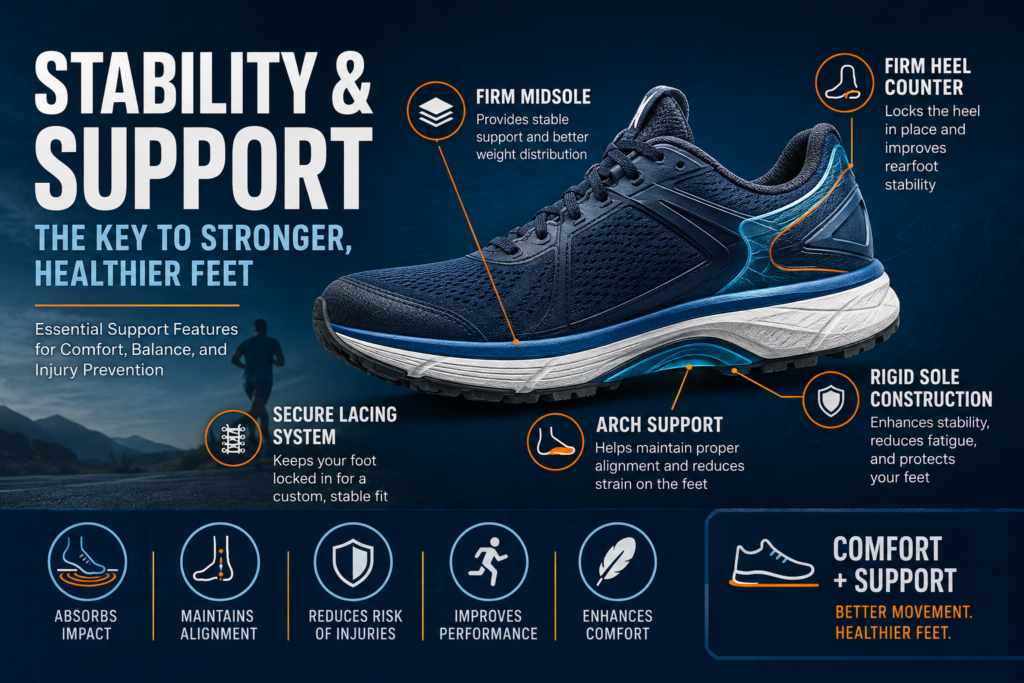
Choosing the right footwear involves more than finding a comfortable pair. Cushioning helps absorb impact, while stability and support help keep your feet secure and balanced during movement. Even a shoe that feels soft at first may not provide the support you need for long walks, daily activities, or extended hours of standing.
Whether you are searching for the best walking shoe, a comfortable women shoe, or a durable mens shoe, understanding the essential stability features can help you make a better buying decision.
In this guide, we explore the key footwear support features, their benefits, and how to choose shoes that balance comfort, stability, and everyday performance.
Why Stability and Support Matter in Walking Shoes
Stability and support help control excessive foot movement, improve balance, and provide a more secure foundation when walking or standing. The right combination of features can also help reduce discomfort and fatigue during everyday activities.
When choosing footwear, consider how cushioning, sole construction, heel support, arch support, and fit work together.
For a broader overview, explore our guide to choosing the right footwear for comfort, support, and performance.
1. Firm Midsole for Better Stability
The midsole is the layer between the shoe’s upper and outsole. It plays an important role in cushioning, shock absorption, and structural support.
A well-constructed midsole should provide enough firmness to maintain stability without feeling unnecessarily hard underfoot.
Benefits of a Firm Midsole
- Helps distribute body weight more evenly.
- Reduces excessive compression during movement.
- Provides a more stable walking platform.
- Supports comfort during prolonged standing and walking.
A suitable midsole can be particularly useful for people who spend long hours on their feet. However, the ideal firmness depends on individual comfort, foot mechanics, and the intended activity.
When comparing options for the best walking shoe, look for a midsole that combines adequate cushioning with dependable support.
Learn more about the key features to look for in walking and standing shoes.
2. Rigid Sole Construction for a Stable Base
The outsole is the bottom layer of the shoe that contacts the ground, while the midsole contributes cushioning and structure. Together, these components influence how stable the shoe feels during movement.
A shoe that resists excessive twisting can provide a more controlled platform for activities that require additional stability. However, walking shoes should still offer enough flexibility for a natural walking motion.
Benefits of a Stable Sole
- Supports balance on different surfaces.
- Helps provide a secure walking experience.
- Can reduce unnecessary foot movement.
- Offers protection against rough ground, depending on the sole design.
Rigid or structured soles are common in hiking footwear, work shoes, and some sports shoes. For everyday walking, choose a sole that balances stability, flexibility, grip, and comfort.
If you frequently walk on wet or slippery surfaces, read our guide to choosing the best anti-slip footwear.
3. Firm Heel Counter for Improved Heel Support
The heel counter is the reinforced section at the back of a shoe that surrounds the heel. It helps maintain the shoe’s shape and provides structure around the rearfoot.
A supportive heel counter can help keep the heel securely positioned inside the shoe, especially when walking for extended periods.
Benefits of Heel Support
- Helps limit unwanted heel movement.
- Improves the feeling of stability.
- Supports a secure fit around the rearfoot.
- May help reduce discomfort caused by excessive movement inside the shoe.
How to Check the Heel Counter
Before purchasing a shoe, gently press the back of the heel area.
A well-structured heel counter should resist excessive collapse while remaining comfortable against your heel. Also, check whether the heel slips when you walk.
A secure heel fit is important when selecting a women’s walking shoe or a mens shoe for everyday use, travel, or long working hours.
You can also follow our simple stability tests before buying shoes.
4. Arch Support for Different Foot Types
The arch helps distribute body weight and contributes to the foot’s natural movement. Appropriate arch support can improve comfort for some people, particularly during prolonged walking or standing.
However, not everyone needs the same type of support. The right choice depends on your foot shape, comfort preferences, and any existing foot concerns.
Normal or Neutral Arches
People with neutral arches may find that neutral walking shoes with balanced cushioning and support work well for them.
Flat Feet
People with flat feet may experience inward rolling of the foot, known as overpronation. Depending on their individual needs, shoes with additional stability features may provide a more comfortable walking experience.
High Arches
High arches may concentrate pressure around the heel and forefoot. Cushioned footwear with a comfortable, appropriately shaped footbed may help distribute pressure more evenly.
The goal is to choose footwear that feels comfortable and supports your natural movement rather than assuming that one arch-support design works for everyone.
For more guidance, read our article on how to choose shoes based on foot type.
5. Secure Lacing System for a Better Fit
A shoe’s lacing system helps keep the foot securely positioned inside the footwear. Even a shoe with good cushioning and a supportive sole may feel unstable if it does not fit properly.
Correctly adjusted laces help reduce unnecessary movement while allowing enough room for natural foot expansion.
Benefits of Proper Lacing
- Helps prevent heel slippage.
- Improves the feeling of a secure fit.
- Reduces friction that may contribute to blisters.
- Allows you to adjust the fit around the midfoot.
- Supports comfort during longer walks.
Some performance shoes include additional eyelets for heel-lock lacing, which can help reduce heel movement when used correctly.
When shopping for the best walking shoe, make sure the shoe fits comfortably around the heel and midfoot without squeezing your toes.
Our shoe fitting guide explains what to look for when checking footwear fit.
6. Cushioning and Support: Understanding the Difference
Cushioning and support work together, but they serve different purposes.
| Feature | Cushioning | Support |
|---|---|---|
| Primary function | Absorbs impact | Helps maintain stability |
| Main benefit | Comfort and pressure management | Secure and controlled movement |
| Key consideration | Softness and impact absorption | Structure, fit, and foot movement |
| Important for | Everyday walking and prolonged use | Walking, standing, and activity-specific stability |
The best footwear balances both features. Excessively soft footwear may not provide the stable feel some people prefer, while overly rigid footwear may feel uncomfortable if it does not suit their walking style.
Explore our guides to the core benefits of footwear cushioning and understanding cushioning levels to learn more.
7. Choosing the Right Women’s Shoe and Mens Shoe
Footwear should be selected according to fit, comfort, intended use, and individual foot needs. Both women’s and men’s shoes should provide adequate toe room, a secure heel, appropriate cushioning, and a stable sole.
What to Look for in a Women’s Shoe
When choosing a women shoe for walking or standing, consider:
- A comfortable fit that accommodates your foot’s shape.
- Adequate cushioning for daily activities.
- A supportive heel counter.
- A stable sole with suitable grip.
- Adjustable lacing or another secure closure system.
The best option is one that fits well and feels comfortable throughout your typical day, whether you are commuting, shopping, travelling, or working.
What to Look for in a Mens Shoe
When selecting a mens shoe for everyday walking, pay attention to:
- Sufficient width and toe-box space.
- A stable midsole that suits your walking needs.
- Secure heel support.
- Comfortable cushioning for extended wear.
- Durable outsole construction and suitable traction.
Men who spend long hours standing or walking may benefit from comparing different cushioning and support designs before choosing a pair.
For recommendations based on different needs, explore our guide to the best walking and standing shoes by category.
8. Match Stability Features to Your Activity
Different activities place different demands on your footwear. Choosing shoes based on how you intend to use them can improve comfort and help you find the right combination of support and flexibility.
- Everyday walking: Look for balanced cushioning, a comfortable fit, and a stable sole.
- Long hours of standing: Prioritise cushioning, heel comfort, and support that remains comfortable throughout the day.
- Running: Consider activity-specific cushioning, a secure heel, and stability features suited to your gait.
- Gym training: Choose a stable platform appropriate for your exercises.
- Hiking: Look for durable construction, suitable traction, and support appropriate for the terrain.
For more detailed recommendations, read how to choose shoes based on activity.
9. Simple Tests to Check Shoe Stability Before Buying
You can perform a few simple checks when comparing footwear in a store.
Check the heel: Gently squeeze the heel counter to assess how well it maintains its shape.
Check the sole: Bend the shoe gently to understand where it flexes. Walking shoes generally need appropriate forefoot flexibility without excessive twisting.
Check the fit: Make sure your toes have enough room and your heel feels secure when you walk.
Walk in the shoes: Try several steps and notice whether the footwear feels balanced, comfortable, and stable.
Assess the grip: Look at the outsole pattern and consider whether it suits the surfaces on which you normally walk.
These checks can help you compare options, although they cannot guarantee injury prevention or determine whether a shoe is medically suitable for a particular foot condition.
Conclusion
Stability and support are important considerations when choosing comfortable, dependable footwear. A well-designed midsole, stable sole construction, supportive heel counter, appropriate arch support, and secure lacing system can all contribute to a better walking experience.
Whether you are looking for the best walking shoe, a practical women shoe, or a reliable mens shoe, focus on fit, cushioning, stability, and the activities you perform most often.
The right footwear should feel comfortable from the start, keep your foot securely positioned, and provide support suited to your individual needs. By understanding these features, you can make a more informed choice for everyday comfort and long-term foot care.