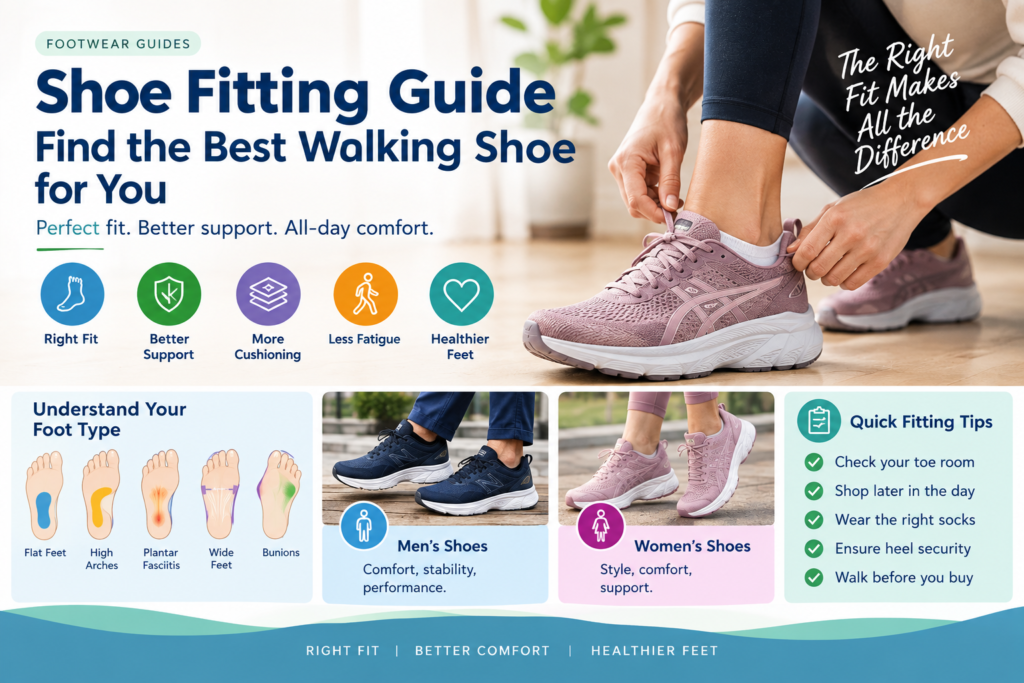
Even the best walking shoe will not provide lasting comfort if it does not fit properly. Choosing footwear based only on appearance, brand reputation, or standard shoe size can lead to discomfort, blisters, pressure points, and foot fatigue.
A properly fitted shoe should provide enough room for your toes, secure your heel, support your foot, and feel comfortable during movement. Whether you are choosing men’s shoes or women’s shoes for walking, work, fitness, commuting, or travel, the right fit is just as important as cushioning and support.
Your foot shape and daily activity also matter. Before purchasing a new pair, learn how to choose shoes based on foot type so you can select footwear that matches your individual needs.
Why Proper Shoe Fit Matters
A properly fitted shoe can help:
- Improve walking comfort
- Reduce foot fatigue
- Prevent blisters and pressure points
- Improve stability and balance
- Allow natural toe movement
- Provide better support during daily activities
- Reduce discomfort caused by poorly fitting footwear
Finding the best walking shoe is not simply about choosing the most cushioned or expensive model. A shoe needs to fit your foot correctly to deliver its intended benefits.
Shoe Fit Statistics
| Shoe Fitting Factor | Recommended Guidance |
|---|---|
| Toe space | Approximately half an inch |
| Best time to try shoes | Late afternoon or evening |
| Shoes to try | Both left and right shoes |
| Most important fitting factor | Overall comfort and secure fit |
| Common fitting problem | Shoes that are too short or narrow |
Shop for Shoes Later in the Day
One of the most useful shoe-fitting tips is to shop later in the afternoon or evening.
Feet can naturally change in size throughout the day because of walking, standing, exercise, temperature, and normal fluid retention. A pair that feels comfortable in the morning may feel tighter after several hours of activity.
Why Do Feet Swell?
Several factors can contribute to changes in foot size during the day, including:
- Walking and exercise
- Long periods of standing
- Warm temperatures
- Daily activity
- Extended travel
Trying on men’s shoes or women’s shoes later in the day gives you a better idea of how they may feel during normal daily use.
Best Practice
When trying on a new pair:
- Shop in the afternoon or evening.
- Try on both shoes.
- Walk around for several minutes.
- Check the fit while standing and walking.
- Wear the socks you normally use.
For more guidance, read our complete guide on key features to look for in walking and standing shoes.
Wear the Right Socks When Fitting Shoes
The socks you wear can affect how your shoes fit.
For example, trying on walking shoes with thin everyday socks and then wearing thick athletic socks later can make the shoes feel tighter.
Why Socks Matter
Different socks can change:
- Available shoe volume
- Heel security
- Forefoot comfort
- Overall tightness
- Cushioning inside the shoe
What Socks Should You Wear?
Walking Shoes
Wear the athletic or walking socks you normally use.
Work Shoes
Use your regular work socks, particularly if you spend several hours standing.
Travel Shoes
Wear the type of socks you expect to use during your trip.
This is particularly important when selecting the best walking shoe for long-distance walking, travel, or sightseeing.
Maintain Enough Toe Space
Your toes need enough room to move naturally while walking.
A shoe that is too short can place pressure on the toes and toenails, while an excessively long shoe can allow the foot to slide and reduce stability.
How Much Toe Room Do You Need?
A useful general guideline is approximately half an inch of space, or about the width of a thumb, between your longest toe and the front of the shoe.
Keep in mind that the longest toe is not always the big toe.
Benefits of Proper Toe Space
Adequate toe room can help provide:
- Better comfort
- Reduced pressure
- More natural toe movement
- Lower risk of rubbing and blisters
- Improved comfort during long walks
Signs Your Shoes Are Too Small
Watch for:
- Toes touching the front
- Numbness
- Toenail pressure
- Cramping
- Forefoot squeezing
- Pain when walking
Signs Your Shoes Are Too Large
A shoe may be too large if you notice:
- Excessive heel slipping
- Your foot sliding forward
- Difficulty maintaining stability
- Excessive movement inside the shoe
If you have wider feet, choosing the correct width is just as important as choosing the correct length. See our guide to the best walking shoes for wide feet for additional recommendations.
Follow the Immediate Comfort Rule
One of the most common mistakes when buying footwear is purchasing an uncomfortable pair with the expectation that the shoes will eventually “break in.”
Although some footwear materials may soften slightly with use, a properly fitted walking shoe should feel comfortable from the beginning.
Why Immediate Comfort Matters
If a shoe causes:
- Heel rubbing
- Toe pressure
- Arch discomfort
- Numbness
- Pinching
- Pain
it may not be the right fit for your foot.
The best walking shoe should provide comfortable support without creating obvious pressure points.
What to Test Before Buying
Spend several minutes walking in the shoes before making your decision.
Heel Security
Your heel should remain secure without excessive slipping.
Arch Comfort
The arch should feel supported without uncomfortable pressure.
Toe Movement
Your toes should have enough space to move naturally.
Overall Comfort
The shoe should feel comfortable while standing and walking.
Shoe Fit Checklist
| Fit Check | What to Look For |
|---|---|
| Heel | Secure with minimal slipping |
| Toe room | Approximately half an inch |
| Width | No squeezing or pressure |
| Arch | Comfortable support |
| Midsole | Comfortable underfoot |
| Upper | No rubbing or pinching |
| Overall fit | Comfortable while walking |
When comparing men’s shoes and women’s shoes, don’t assume that the same size will provide the same fit across different brands or models. Shoe shapes, widths, and construction can vary considerably.
Consider Your Foot Type
A proper fit starts with understanding your feet.
People with flat feet may require more stability, while those with high arches may prefer additional cushioning. People with wide feet may need a wider toe box, while those with bunions may benefit from flexible upper materials.
Understanding your foot structure can make it easier to find the best walking shoe for your needs.
For a more detailed breakdown, explore our guide on how to choose shoes based on foot type.
Choose Shoes Based on Your Activity
Your footwear requirements also change depending on how you use your shoes.
A shoe designed for fitness walking may have different cushioning and flexibility characteristics than a shoe designed for standing at work.
Similarly, travel footwear needs to remain comfortable during thousands of steps, while work footwear may require additional durability and slip resistance.
Read our guide on how to choose shoes based on activity to understand which features are most suitable for fitness walking, commuting, standing, and travel.
Choosing Men’s Shoes for Walking
When selecting men’s shoes for walking, focus on fit and function rather than appearance alone.
Look for:
- Adequate toe room
- Comfortable width
- Secure heel fit
- Appropriate cushioning
- Supportive midsole
- Breathable upper
- Durable outsole
Men with wider feet should also check whether the model is available in wide or extra-wide sizes.
The right men’s shoes should feel secure without restricting natural foot movement.
Choosing Women’s Shoes for Walking
When selecting women’s shoes, the same basic fitting principles apply. Comfort, width, toe room, heel security, cushioning, and support should all be considered.
Look for:
- Comfortable toe space
- Appropriate width
- Secure heel
- Supportive cushioning
- Breathable materials
- Flexible construction
- A comfortable overall fit
Whether you’re looking for casual footwear, fitness walking shoes, travel shoes, or the best walking shoe for everyday use, prioritize the way the shoe feels on your feet.
Common Shoe Fitting Mistakes
Many people unknowingly choose footwear that does not properly match their feet.
Buying Based Only on Shoe Size
Shoe sizing can vary between brands and models. Do not assume that the same numerical size will always fit the same way.
Ignoring Width
A shoe can have the correct length but still be too narrow.
If your toes feel compressed or your forefoot feels squeezed, consider another width or a different shoe shape.
Choosing Style Over Comfort
Appearance is important to many shoppers, but comfort should come first when selecting footwear for walking or standing.
Assuming Shoes Will Stretch
Do not rely on shoes becoming significantly larger or more comfortable after repeated use. If the shoe creates painful pressure from the beginning, look for a better-fitting option.
Buying Without Walking in the Shoes
Standing still is not enough to evaluate footwear. Walk around and pay attention to heel movement, toe room, arch comfort, and overall stability.
Quick Shoe Fitting Checklist
Before buying your next pair of walking shoes, ask yourself:
- Do my toes have enough room?
- Is my heel secure?
- Does the shoe feel comfortable immediately?
- Is the width comfortable?
- Does the arch feel supported?
- Am I wearing my usual socks?
- Have I walked around in the shoes?
- Is there any rubbing or pressure?
- Does the shoe suit my activity?
If you can answer yes to these questions, the shoes are more likely to provide a comfortable fit.
How to Find the Best Walking Shoe
The best walking shoe is not necessarily the one with the highest price or the most cushioning. It is the shoe that fits your feet properly and provides the right combination of comfort, support, cushioning, stability, and durability for your intended use.
Before buying, consider:
- Foot type – Flat, high-arched, wide, or other foot characteristics.
- Activity – Walking, work, travel, fitness, or commuting.
- Fit – Length, width, toe room, and heel security.
- Cushioning – Choose a level that feels comfortable for your activity.
- Support – Consider whether you need additional stability or arch support.
- Materials – Breathable and comfortable materials can improve everyday wear.
- Durability – Choose construction appropriate for your expected usage.
For more options, explore our guide to the best walking and standing shoes by category.
Conclusion
Proper shoe fit is just as important as cushioning, support, and durability. Whether you’re choosing men’s shoes, women’s shoes, or the best walking shoe for everyday use, the footwear should fit comfortably and support your natural movement.
Shopping later in the day, wearing the right socks, maintaining adequate toe space, checking heel security, and walking in the shoes before purchasing can help you make a better decision.
Most importantly, don’t choose footwear based only on brand, appearance, or size. Consider your foot type, activity, fit, and comfort to find shoes that can support you throughout the day.