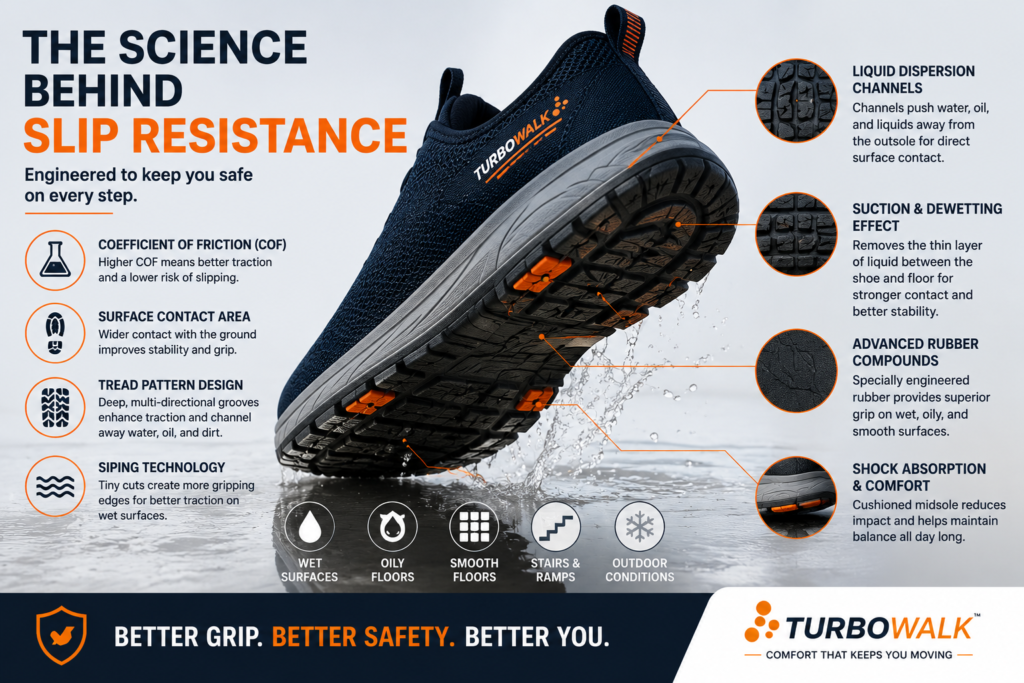
The effectiveness of anti slip footwear depends on how well it creates friction between the shoe and the walking surface. Advanced outsole materials, tread patterns, and grip technologies work together to improve traction and reduce the risk of slipping on wet, oily, or smooth floors. Understanding these features can help you choose footwear that offers better safety and performance.
Coefficient of Friction (COF)
The Coefficient of Friction (COF) measures how much grip exists between the shoe outsole and the ground. A higher COF means better traction and a lower chance of slipping. High-quality anti slip footwear is designed to maximize friction, even on challenging surfaces.
Surface Contact Area
The more contact the outsole has with the ground, the better the stability. Flexible rubber soles adapt to different surfaces, allowing the shoe to maintain consistent grip while walking or standing.
Tread Pattern Design
Deep grooves and multi-directional tread patterns help improve traction by increasing the shoe’s grip. They also channel away water, oil, and dirt, preventing them from reducing contact between the outsole and the floor.
Siping Technology
Siping consists of small, narrow cuts in the outsole that create additional gripping edges. These edges improve traction on wet surfaces by increasing flexibility and helping the sole maintain better contact with the ground.
Liquid Dispersion Channels
Many anti slip shoes feature specially designed channels that push water, oil, and other liquids away from the outsole. This allows the rubber sole to make direct contact with the surface, reducing the risk of hydroplaning and improving grip.
Suction and Dewetting Effect
Some advanced anti slip outsoles use a combination of suction and dewetting technology. As you step, the outsole helps remove the thin layer of liquid between the shoe and the floor, creating stronger contact and better stability on slippery surfaces.
CONCLUSION
The performance of anti slip footwear depends on several factors, including outsole material, tread pattern, friction, and liquid-dispersing technology. Understanding these features will help you choose footwear that delivers reliable grip, improved stability, and greater confidence on slippery surfaces.