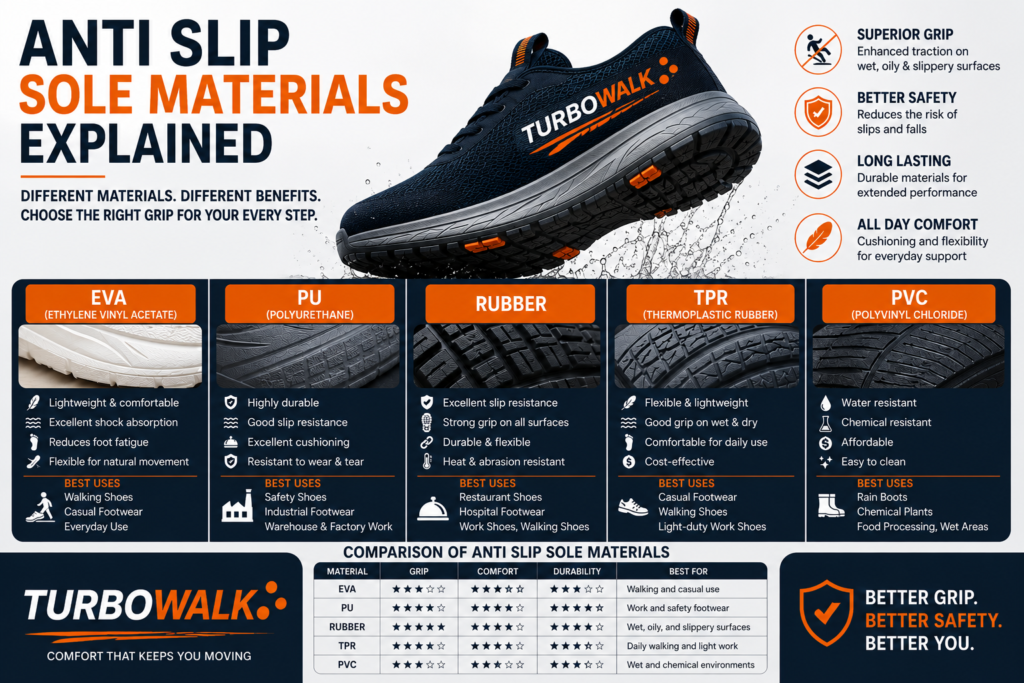
The outsole material plays a major role in the performance of anti slip footwear. Different materials offer different levels of grip, durability, flexibility, and comfort. Understanding these materials will help you choose the right anti slip footwear based on your work environment and daily activities.
EVA (Ethylene Vinyl Acetate)
EVA is a lightweight and flexible material commonly used in midsoles and some outsoles. It provides excellent cushioning, making it ideal for people who spend long hours walking or standing.
Benefits
- Lightweight and comfortable
- Excellent shock absorption
- Reduces foot fatigue
- Flexible for natural movement
Limitations
- Less durable than rubber
- Lower slip resistance on oily surfaces
Best Uses
- Walking shoes
- Casual footwear
- Everyday use
PU (Polyurethane)
PU is a durable material known for its excellent cushioning and wear resistance. It is widely used in work and safety footwear because it offers long-lasting comfort and good traction.
Benefits
- Highly durable
- Good slip resistance
- Excellent cushioning
- Resistant to wear and tear
Limitations
- Slightly heavier than EVA
- Can become less flexible over time
Best Uses
- Safety shoes
- Industrial footwear
- Warehouse and factory work
Rubber
Rubber is considered the best outsole material for anti slip footwear due to its superior grip and flexibility. It performs well on wet, oily, and smooth surfaces, making it a popular choice for professional and everyday footwear.
Benefits
- Excellent slip resistance
- Strong grip on multiple surfaces
- Durable and flexible
- Heat and abrasion resistant
Limitations
- Heavier than EVA
- Premium rubber shoes may cost more
Best Uses
- Restaurant shoes
- Hospital footwear
- Work shoes
- Walking shoes
TPR (Thermoplastic Rubber)
TPR combines the flexibility of rubber with the lightweight properties of plastic. It provides good traction while remaining comfortable for everyday wear.
Benefits
- Flexible and lightweight
- Good grip on dry and wet surfaces
- Comfortable for daily use
- Cost-effective
Limitations
- Less durable than natural rubber
- Not ideal for heavy industrial use
Best Uses
- Casual footwear
- Walking shoes
- Light-duty work shoes
PVC (Polyvinyl Chloride)
PVC is a waterproof and affordable material often used in work boots and protective footwear. It performs well in wet environments but is generally less flexible than rubber.
Benefits
- Water resistant
- Chemical resistant
- Affordable
- Easy to clean
Limitations
- Less flexible
- Lower comfort during long hours
- Reduced grip compared to premium rubber
Best Uses
- Rain boots
- Chemical plants
- Food processing industries
- Wet work environments
Comparison of Anti Slip Sole Materials
| Material | Grip | Comfort | Durability | Best For |
| EVA | Moderate | ⭐⭐⭐⭐⭐ | ⭐⭐⭐ | Walking and casual use |
| PU | High | ⭐⭐⭐⭐ | ⭐⭐⭐⭐⭐ | Work and safety footwear |
| Rubber | ⭐⭐⭐⭐⭐ | ⭐⭐⭐⭐ | ⭐⭐⭐⭐⭐ | Wet, oily, and slippery surfaces |
| TPR | High | ⭐⭐⭐⭐ | ⭐⭐⭐⭐ | Daily walking and light work |
| PVC | Moderate | ⭐⭐⭐ | ⭐⭐⭐⭐ | Wet and chemical environments |
CONCLUSION
The outsole material directly affects the safety, comfort, and durability of anti slip footwear. Rubber provides the best overall grip, PU offers excellent durability for demanding workplaces, EVA delivers lightweight comfort, TPR balances flexibility and traction, while PVC is ideal for wet environments. Choosing the right material ensures better performance and long-lasting protection.