Why Choosing the Right Walking and Standing Shoes Matters
Whether you’re a healthcare professional, teacher, retail employee, traveler, or fitness enthusiast, your feet support you through thousands of steps every day. The shoes you wear play a critical role in determining your comfort, posture, and overall foot health.
Walking is one of the most accessible forms of exercise and daily movement. Research suggests that adults who consistently achieve approximately 7,000–8,000 steps per day can significantly improve their overall health and reduce the risk of chronic diseases. However, with every step taken, pressure is placed on the feet, ankles, knees, hips, and lower back. Without proper footwear, this repetitive stress can lead to discomfort, fatigue, and long-term musculoskeletal issues.
The best walking and standing shoes are specifically designed to provide cushioning, support, stability, and durability. They help absorb impact, maintain proper alignment, and reduce strain on the body, making them essential for anyone who spends extended periods on their feet.
Impact on Foot Health
The human foot is a complex structure consisting of 26 bones, 33 joints, and more than 100 muscles, tendons, and ligaments. These components work together to support body weight, maintain balance, and absorb shock during movement.
Every step generates impact forces that travel through the body. When shoes lack proper cushioning and support, these forces can place excessive stress on the feet and surrounding joints. Over time, this may contribute to common foot conditions such as:
- Plantar fasciitis
- Heel pain
- Arch strain
- Bunions
- Achilles tendon discomfort
- General foot fatigue
For individuals who stand for long hours on hard surfaces such as concrete or tile floors, the risk of discomfort is even greater. Supportive footwear helps reduce pressure points and provides better shock absorption, allowing the feet to function more efficiently throughout the day.
Benefits of Proper Support
Supportive walking shoes offer far more than simple comfort. They contribute to better biomechanics, improved posture, and reduced stress on the body’s joints.
Some key benefits include:
- Improved body alignment
- Better balance and stability
- Reduced muscle fatigue
- Enhanced walking efficiency
- Lower risk of injuries
- Greater all-day comfort
Arch support is particularly important because it helps distribute body weight evenly across the foot. This reduces excessive strain on specific areas and promotes a more natural walking motion.
Individuals working in healthcare, retail, hospitality, education, and manufacturing often spend eight to twelve hours on their feet daily. For these professionals, supportive footwear can significantly improve comfort and reduce fatigue during long shifts.
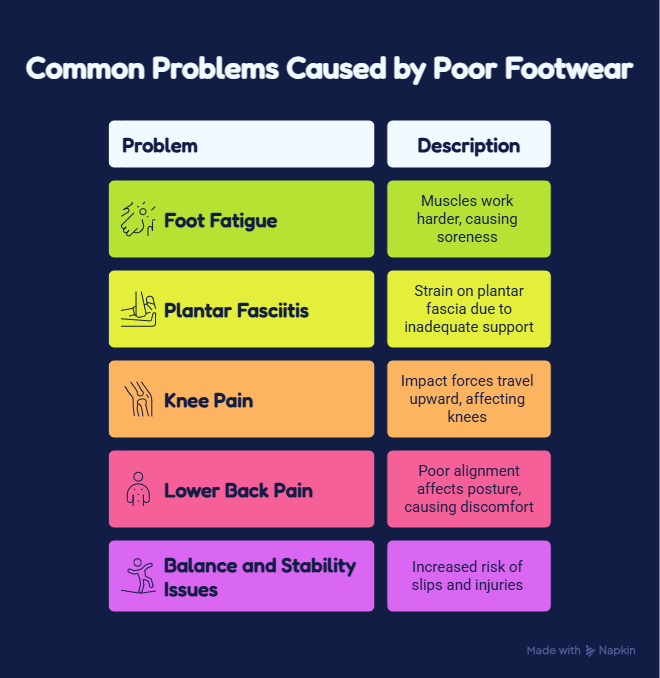
Common Problems Caused by Poor Footwear
Many foot-related issues can be traced directly to wearing shoes that lack proper support, cushioning, or fit.
Foot Fatigue
Unsupportive footwear forces the muscles of the feet and legs to work harder, leading to soreness and exhaustion.
Plantar Fasciitis
Inadequate arch support can place excessive strain on the plantar fascia, a thick band of tissue that supports the arch of the foot.
Knee Pain
Poor shock absorption allows greater impact forces to travel upward through the knees during walking and standing.
Lower Back Pain
Footwear that does not provide proper alignment can negatively affect posture, contributing to discomfort in the lower back.
Balance and Stability Issues
Shoes with poor heel support or insufficient lateral stability can increase the risk of slips, trips, and ankle injuries.
Current Statistics on Walking and Foot Health
Recent research highlights the importance of both regular walking and proper footwear. The following statistics demonstrate why investing in supportive walking and standing shoes is essential for long-term comfort and foot health.
| Walking & Foot Health Statistic | Current Data |
| Recommended daily steps for overall health | 7,000–10,000 steps per day |
| Average daily steps taken by adults | 4,000–7,000 steps |
| Reduction in all-cause mortality risk at 7,000 daily steps | Up to 47% lower compared to 2,000 daily steps |
| Number of bones in the human foot | 26 bones |
| Number of joints in the human foot | 33 joints |
| Muscles, tendons, and ligaments in the foot | More than 100 |
| Average hours nurses spend standing during a shift | 8–12 hours |
| Average lifespan of walking shoes | 300–500 miles (480–800 km) |
| Recommended replacement period for frequently used walking shoes | Every 6–9 months |
| Percentage of adults experiencing foot pain annually | Approximately 20–30% |
These statistics show how much stress our feet endure every day. Whether you’re walking thousands of steps, standing for long work shifts, or spending hours commuting, the right footwear can significantly improve comfort, reduce fatigue, and help prevent common foot-related problems.
Conclusion
Choosing the right walking and standing shoes is about much more than comfort. Your footwear directly affects foot health, posture, balance, and overall physical well-being. Since the average person takes thousands of steps every day, supportive shoes help absorb impact, reduce fatigue, and prevent common problems such as heel pain, plantar fasciitis, knee discomfort, and lower back strain.
Investing in properly designed walking shoes is one of the simplest ways to improve daily comfort, protect your feet, and support long-term mobility. Understanding why footwear matters lays the foundation for selecting the best walking and standing shoes for your individual needs.