Introduction
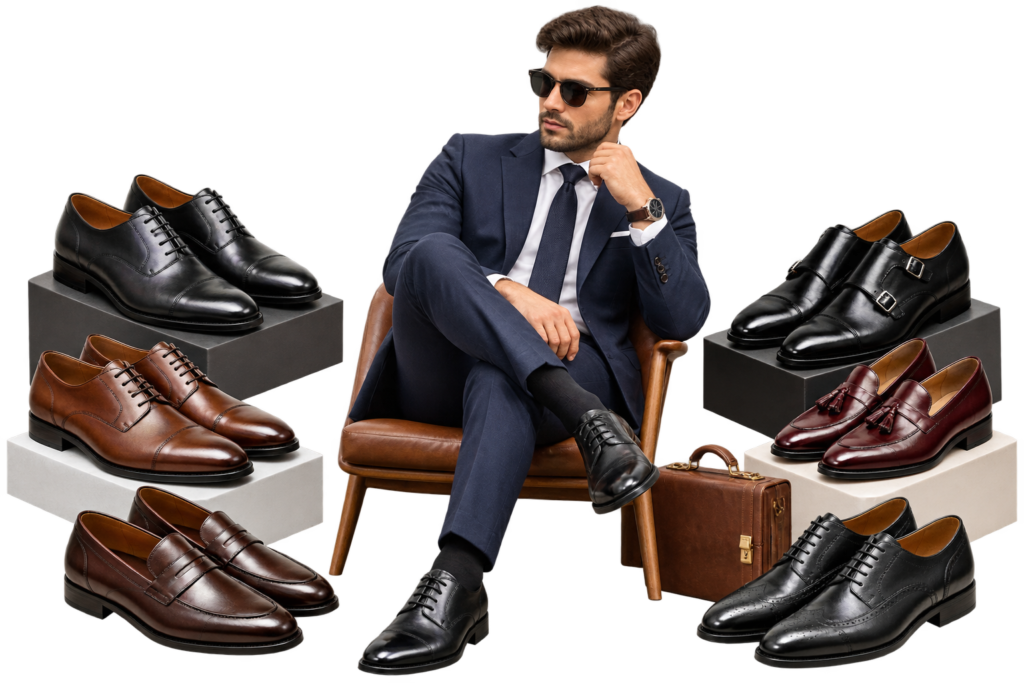
Choosing the right formal shoes for men can instantly improve an outfit. From office meetings and weddings to parties and traditional occasions, the right footwear adds polish and confidence. Your shoes should complement your clothing while providing comfort throughout the day. Whether you prefer classic Oxfords, versatile Derbys, elegant loafers, or monk straps, understanding how to match shoes with different outfits helps create a refined and balanced appearance.
Why Formal Shoes Matter for Men
Formal shoes are an important part of a well-coordinated outfit. Even a carefully selected suit can look incomplete when paired with unsuitable footwear.
The right men shoe should balance three important factors:
- Style
- Comfort
- Occasion
For professional settings, classic black or dark brown shoes are reliable choices. For social events, you can experiment with loafers, monk straps, polished finishes, and richer colors.
Types of Formal Shoes for Men
Oxford Shoes
Oxford shoes are among the most traditional choices for formal dressing. Their closed-lacing design creates a clean and sophisticated appearance.
They work particularly well with:
- Business suits
- Formal trousers
- Wedding outfits
- Business meetings
- Black-tie-inspired occasions
Black Oxfords are especially suitable for highly formal events, while brown versions can provide greater versatility.
Derby Shoes
Derby shoes feature an open-lacing design and generally offer a slightly more relaxed appearance than Oxfords.
They can be paired with:
- Formal trousers
- Business suits
- Blazers
- Chinos for smart-casual outfits
- Traditional formal clothing
Brown Derby shoes can be particularly useful when you want a formal appearance without making the outfit look overly strict.
Loafers
Loafers are slip-on shoes that combine convenience with a polished appearance. Depending on the design, they can work for both formal and semi-formal occasions.
Penny loafers, tassel loafers, and sleek leather loafers can complement trousers, suits, and evening outfits.
Monk Strap Shoes
Monk straps are recognizable by their buckle fastening instead of traditional laces. They offer a distinctive alternative to conventional formal footwear.
Single and double monk straps can work well with tailored trousers, suits, and sophisticated evening outfits.
How to Match Formal Shoes With Different Outfits
Formal Shoes With Suits
A suit requires footwear that matches its level of formality.
Black formal shoes are a classic choice for:
- Black suits
- Charcoal suits
- Dark navy suits
Brown shoes can complement:
- Navy suits
- Blue suits
- Light grey suits
- Earth-toned outfits
The color of your belt should generally coordinate closely with your shoes to create a more cohesive appearance.
Formal Shoes With Trousers
Formal trousers offer more flexibility than complete suits. Oxfords, Derbys, and loafers can all work depending on the occasion.
For a traditional appearance, choose polished leather shoes. For a more contemporary outfit, sleek loafers or monk straps can add personality without appearing too casual.
Formal Shoes With Blazers
Blazers can be styled with formal trousers, chinos, or tailored pants. Loafers and Derbys are particularly versatile options.
For example:
- Navy blazer + beige trousers + brown loafers
- Grey blazer + black trousers + black Derbys
- Brown blazer + cream trousers + dark brown loafers
The key is to maintain balance between the colors and formality of each element.
Formal Shoes for Traditional Occasions
Formal footwear can also complement traditional clothing. Men can pair elegant loafers or refined Derby shoes with tailored kurtas, trousers, bandhgalas, and other formal ethnic outfits.
Dark brown and black shoes are versatile choices because they work with many traditional colors.
When choosing footwear for traditional clothing, consider:
- Outfit color
- Fabric
- Embroidery
- Occasion
- Overall level of formality
The footwear should enhance the outfit rather than compete with it.
Formal Shoes for Parties and Evening Events
Evening events provide more opportunities to experiment with footwear. Polished loafers, monk straps, and sleek formal shoes can work well with sophisticated party outfits.
For evening occasions, consider:
- Burgundy
- Dark brown
- Black
- Deep tan
- Subtle textured finishes
Patent or high-shine leather can also work for particularly formal evening events.
Formal Shoes for Travel and Long Days
Business trips, conferences, exhibitions, weddings, and large events can involve many hours of walking. In these situations, comfort becomes especially important.
Although a best walking shoe is specifically designed for extended walking, some formal shoes include cushioned insoles, flexible soles, and supportive construction.
When choosing formal footwear for a long day, look for:
- Comfortable cushioning
- Adequate arch and heel support
- A secure fit
- Flexible construction
- Good grip
- Breathable materials
- Lightweight construction
A stylish shoe is useful only when you can comfortably wear it throughout the occasion.
How to Choose the Right Formal Shoes for Men
Before buying formal shoes, consider where and how you plan to wear them.
Consider the Occasion
A formal business meeting may require classic Oxfords, while a dinner or wedding may allow loafers or monk straps.
Choose the Right Color
Black offers maximum formality and works well with darker suits. Brown provides more versatility and pairs well with navy, blue, grey, and earth-toned clothing.
Check the Fit
A good fit should provide enough room for your toes without allowing excessive movement inside the shoe.
Avoid shoes that:
- Pinch your toes
- Slip at the heel
- Feel excessively tight
- Cause pressure points
Consider Comfort
If you expect to stand or walk for several hours, cushioning and support should be priorities.
Men Shoe vs Women Shoe: Choosing Footwear for Formal Outfits
Formal footwear differs in design and styling across men’s and women’s fashion.
A men shoe collection may include Oxfords, Derbys, loafers, monk straps, and formal boots. A women shoe collection may include pumps, pointed-toe heels, block heels, flats, loafers, and dress shoes.
Despite these differences, the basic principles remain similar:
- Match footwear with the outfit
- Consider the occasion
- Prioritize proper fit
- Choose appropriate colors
- Balance style with comfort
The goal is to create a coordinated appearance rather than allowing footwear to overpower the overall outfit.
Common Mistakes to Avoid
Even high-quality formal shoes can look unsuitable when styled incorrectly.
Avoid these common mistakes:
Wearing the Wrong Shoe Color
A shoe color that clashes with your trousers or suit can make the entire outfit appear unbalanced.
Ignoring Comfort
Avoid choosing footwear based entirely on appearance, particularly when you expect to wear it for several hours.
Wearing Casual Shoes With Formal Outfits
Running shoes, heavily designed sneakers, and casual sandals generally do not complement highly formal suits.
Neglecting Shoe Maintenance
Scratched, dusty, or poorly maintained shoes can reduce the polished appearance of an otherwise well-dressed outfit.
Regular cleaning and appropriate storage can help maintain the appearance of leather and other formal footwear.
Frequently Asked Questions
What are the best formal shoes for men?
Oxfords, Derbys, loafers, and monk straps are among the most versatile formal shoes for men. The best choice depends on the outfit, occasion, and desired level of formality.
Which shoe color is best for a formal suit?
Black shoes are ideal for highly formal outfits and dark suits. Brown shoes provide greater versatility and work particularly well with navy, blue, grey, and lighter-colored suits.
Can men wear loafers with formal outfits?
Yes. Sleek leather loafers can be styled with suits, tailored trousers, blazers, and many semi-formal outfits.
Are formal shoes comfortable for long days?
Some formal shoes are designed with cushioned insoles, flexible soles, supportive construction, and breathable materials. Choosing the correct size and fit is also important for all-day comfort.
What is the difference between formal shoes and walking shoes?
Formal shoes are primarily designed to complement professional or dressy outfits, while walking shoes focus on cushioning, flexibility, support, and comfort during extended walking.
Can formal shoes be worn with traditional outfits?
Yes. Loafers, Derbys, and other refined formal shoes can complement traditional outfits such as kurtas, tailored trousers, and formal ethnic wear.
Conclusion
The right formal shoes for men can complete an outfit while adding comfort, confidence, and sophistication. Oxfords and Derbys are excellent for traditional formal dressing, while loafers and monk straps provide more versatility for parties, business events, and smart-casual occasions. When choosing a men shoe, consider the outfit, color, occasion, fit, and comfort. Whether dressing for work, travel, weddings, or evening events, the best footwear is one that complements your outfit without compromising comfort.